Type B, Type C, or Type D: Choosing the Right Anti-Static FIBC
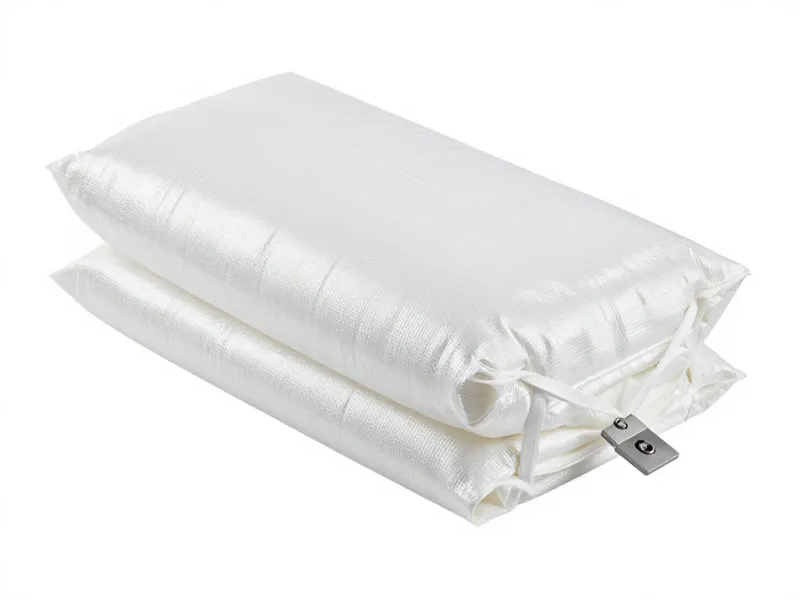
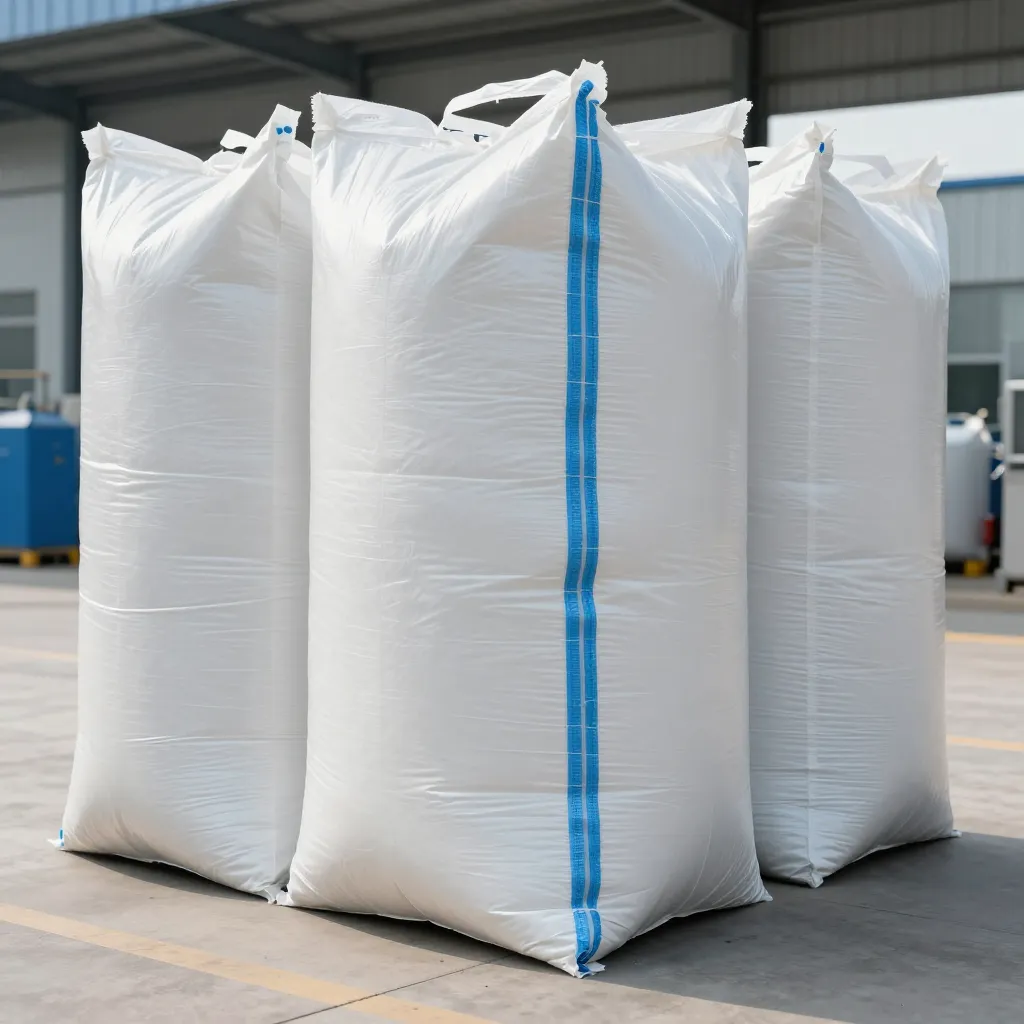
“Anti-static” is the single most misused term in FIBC procurement. It covers three different engineering approaches — additive-based (Type B), conductive (Type C), and static-dissipative (Type D) — with different resistivity ranges, different grounding requirements, and different failure modes. Buying “an anti-static bag” without naming the type is like buying “a fire door” without naming the rating: the bag may exist, and it may do nothing for your actual hazard. This article compares the three types side by side and gives a selection matrix you can take into a specification.
How an FIBC Picks Up a Static Charge
Bulk powder handling generates electrostatic charge through triboelectric contact: particles rubbing the fabric, pneumatic conveying through pipes, and pouring from one container to another. Fine, dry, insulating powders are the worst offenders — which is why the materials that demand anti-static packaging (reactive chemical powders, battery precursors, plastic powders) are also the materials that charge most.
On a standard woven PP bag — an electrical insulator — the charge accumulates with no path to dissipate. If the accumulated voltage bridges a gap (bag-to-spout, bag-to-hand, bag-to-conductive object) with enough energy, the discharge can ignite a flammable atmosphere or a dust cloud. The three anti-static types are three different answers to the same question: where does the charge go?
The Three Types at a Glance
| Type B (anti-static) | Type C (conductive) | Type D (static-dissipative) | |
|---|---|---|---|
| Mechanism | Surface additives lower resistivity | Conductive yarn woven through fabric and loops | Quasi-conductive yarns woven into structure |
| Surface resistivity | Dissipative band, up to 10¹¹ ohms | 10⁴–10⁶ ohms (conductive) | Dissipative band, 10⁶–10¹¹ ohms |
| Grounding required | No | Yes — mandatory | No |
| Performance durability | Additives wash out / deplete | Durable; fails if not grounded | Durable; no additive dependency |
| Typical use | General indoor, low-hazard | Flammable atmospheres, closed loops | Default for dusts and new-energy powders |
Type B: The Additive Approach
Type B fabric is standard woven PP treated with anti-static additives (surface conductors such as carbon black treatments) that lower the surface resistivity into the dissipative band. No grounding is needed; the charge bleeds off slowly through the surface.
The catch is durability. Additives are surface-based: they deplete with time, wear, and washing, and they wash out in rain and outdoor storage. A Type B bag that performed at the factory may be an ordinary insulating bag two months later in a covered yard. Type B is the cheapest entry into anti-static packaging and the right answer for general indoor transfer of low-hazard powders — and the wrong answer for anything exposed to weather, wash-down, or a long logistics chain.
Type C: Conductive — Powerful, and Useless Ungrounded
Type C fabric weaves conductive yarn through the entire fabric and all four loops, putting surface resistivity in the conductive band (10⁴–10⁶ ohms). The bag is a wire. Charge collected anywhere on it flows to ground — if there is a ground to flow to.
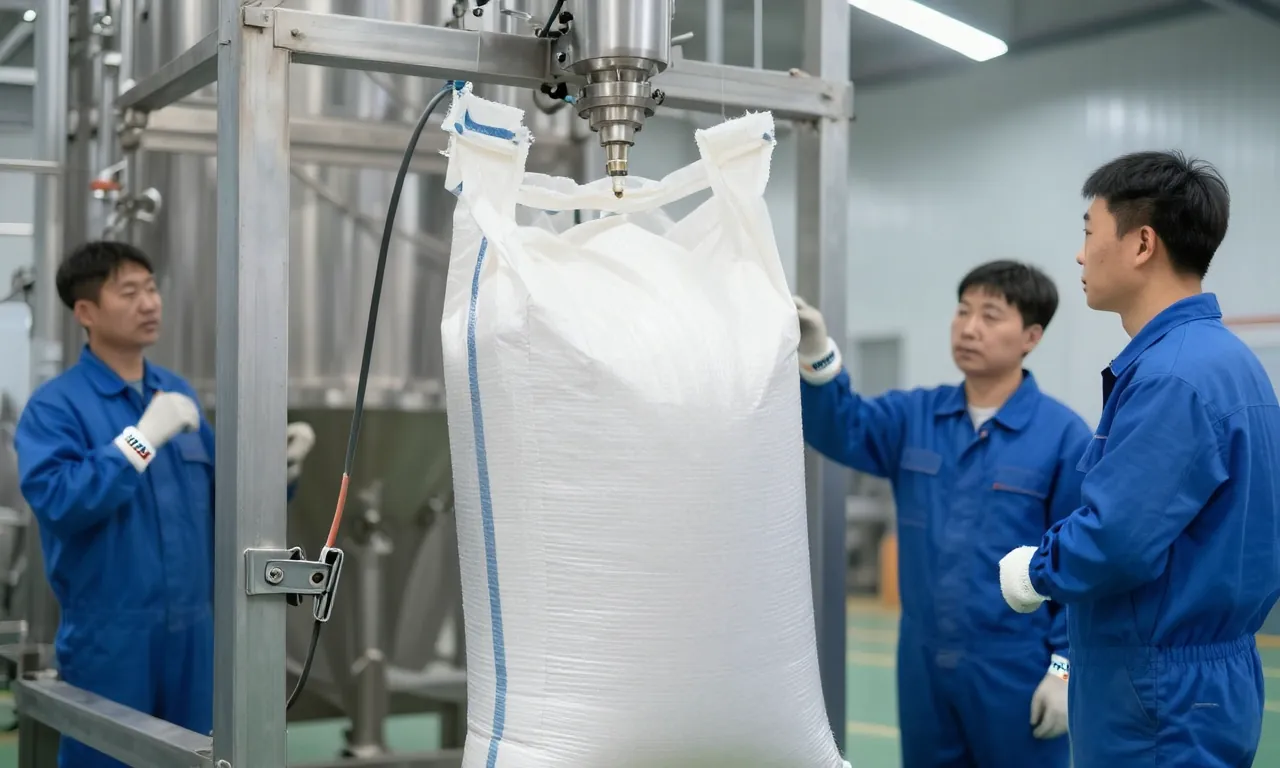
This makes Type C the strongest option in a controlled environment: a filling plant that grounds the bag (loop or frame), the filler, and the transfer path gets near-total charge elimination. It is the standard choice where flammable solvents or vapors are present, and for combustible dusts in closed pneumatic loops.
It is also the option with the most operational dependency. An ungrounded Type C bag is no better than a standard bag — and a specification that assumes grounding at every handling point (shipper’s plant, port, destination) is a specification that fails at the one site nobody controls. If you specify Type C, the grounding SOP is part of the product. Our conductive FIBC guide covers the construction, and the static hazard case study shows what unmanaged charge does to a chemical powder line.
Type D: Static-Dissipative — The Default That Travels
Type D fabric incorporates quasi-conductive yarns woven directly into the fabric structure at precise intervals. Surface resistivity sits in the dissipative band (10⁶–10¹¹ ohms): high enough that charge does not flow as current, low enough that it bleeds away through low-energy corona discharge — tiny controlled discharges that stay below the minimum ignition energy of common dusts and vapors.
The engineering payoff is independence: no ground connection, no additive to wash out, performance that does not depend on operator discipline at intermediate sites. Two limitations to respect (per the standard’s own conditions of use): Type D bags must not be used in the presence of flammable gases or vapors with minimum ignition energy below 0.14 mJ, and they must be kept clear of conductive objects that could be charged by induction.
For cross-border shipments — where you control the fill site and the destination, but not the ports in between — Type D is the default specification in most of the new-energy and specialty-chemical supply chains we see in 2026. Our Type D product page details the construction, and the coated FIBC shows how the fabric system pairs with a moisture barrier (the coating is insulating, so the anti-static path must run through the fabric and loops, not the laminate).
Selection Matrix
| Your situation | Specify | Why |
|---|---|---|
| Flammable solvent vapors present | Type C + documented grounding SOP | Only conductive-and-grounded eliminates charge fast enough |
| Combustible dust, closed pneumatic loop at both ends | Type C or Type D | Either works; C where grounding is guaranteed, D where it is not |
| Fine powders moving across borders / uncontrolled intermediaries | Type D | No grounding dependency; travels |
| General indoor transfer, low-hazard powder | Type B (or Type D if budget allows) | Cheapest adequate answer; B degrades with exposure |
| Outdoor storage or wash-down exposure | Type D | B additives wash out; D structure does not |
| New-energy / battery materials | Type D (with coating) | Industry default; see the lithium materials guide |
How to Verify the Specification
The type letter is a claim; the test data is the product.
- Ask for surface-resistivity test reports on the exact bag specification — gsm, yarn system, coating, loops — not a generic brochure certificate. Our QC testing guide lists what the ISO 21898-1 suite covers and which numbers to read.
- For Type C, get the grounding SOP in writing — which points are grounded (bag, filler, spout, transfer pipe), who verifies it per shift, and what the transfer-rate limit is. An ungrounded Type C claim is a marketing claim.
- For Type D, confirm the induction and MIE conditions — the standard’s own usage limits (no atmospheres below 0.14 mJ MIE, clear of conductive objects) belong in your site’s handling procedure, not just the bag’s data sheet.
- Per-batch, not per-catalog — resistivity is a per-batch measured property for a serious supplier, because yarn lots and treatments vary.
A real deployment of the logic above — conductive packaging protecting a chemical powder line — is documented in our conductive FIBC chemical powder case study.
Bottom Line
Name the type, not the adjective. B is a surface treatment that degrades. C is a wire that only works when you hold the other end. D is a structure that does its job everywhere. Match the mechanism to where your product actually travels and who controls the ground along the way — then verify it with test data for your exact specification.