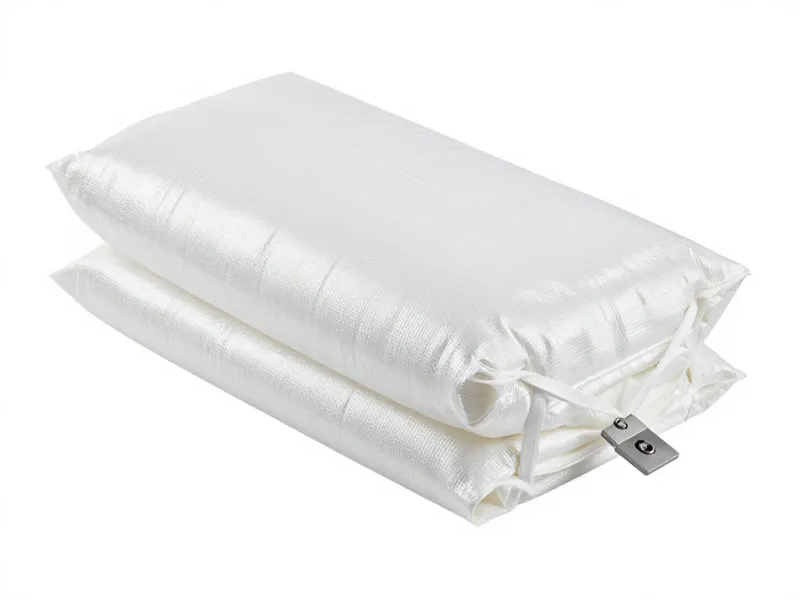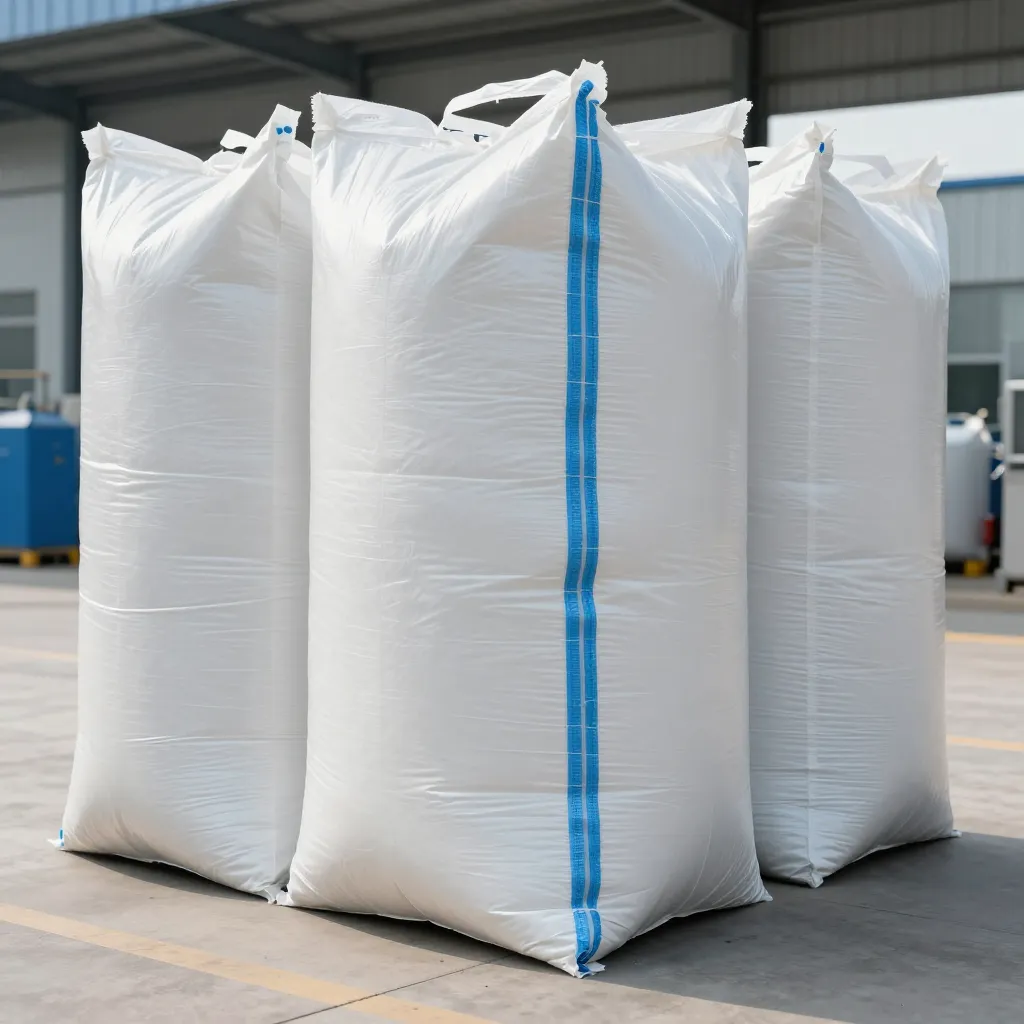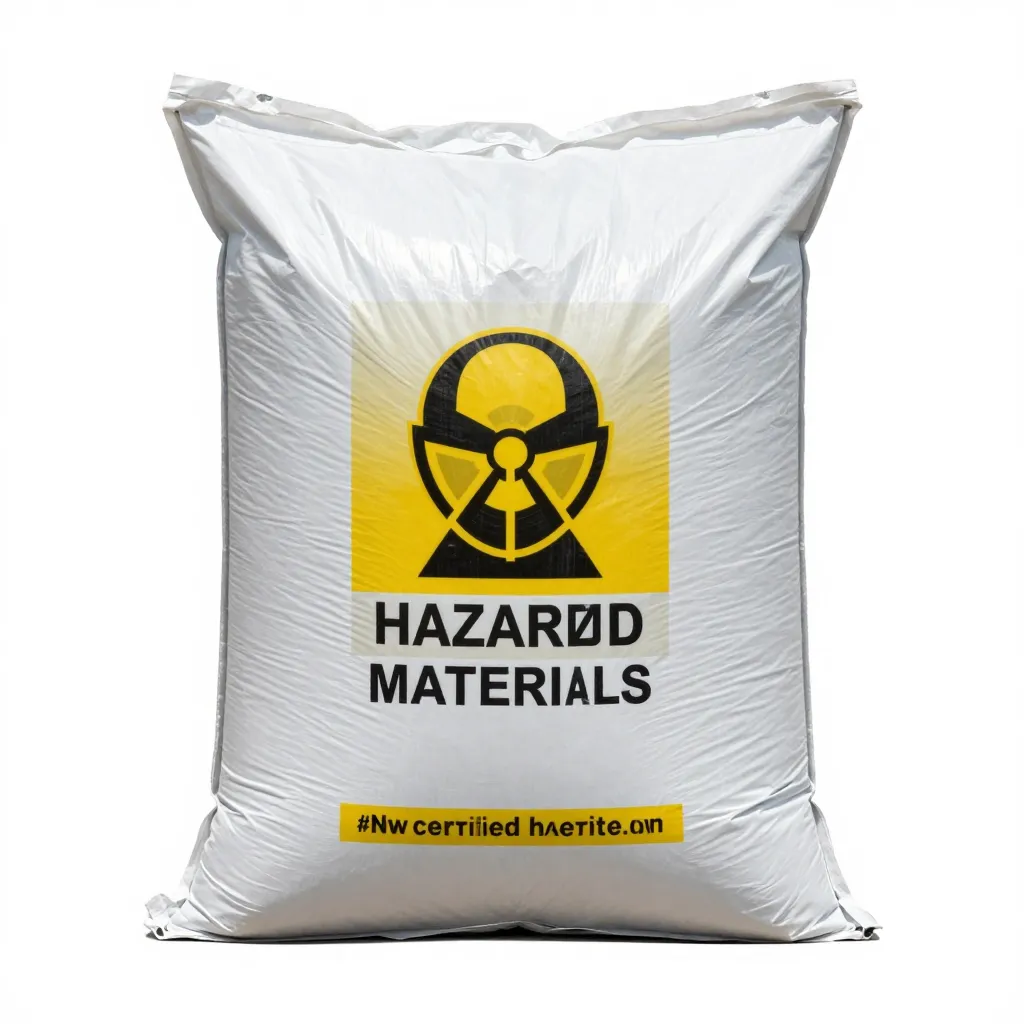
UN-Zertifizierter FIBC für Gefahrgut
UN-zertifizierte FIBC-Säcke gemäß UN-Modellvorschriften für den Transport gefährlicher Feststoffe. Bauartgeprüft (Stapel-, Fall-, Kipp-, Reiß-, Aufrichtprüfung) mit vollständiger Chargenzertifizierung und Rückverfolgbarkeit.
Spezifikationen
- SWL
- 500-2000 kg
- Safety Factor
- 5:1 (6:1 reusable)
- UN Design Type Code
- 13H3/Y (coated woven) / 13H4/Y (film liner)
- Packing Group
- II (medium danger) / III (low danger)
- Fabric Weight
- 160-240 gsm
- Liner Type
- PE liner (standard) / EVOH barrier (optional)
- Test Standards
- UN Model Regulations, ADR, IMDG, IATA (Section 8)
- Certification
- Design type certificate + batch test reports
- Retesting Interval
- 12-24 months (varies by competent authority)
Merkmale
- Design-type tested: stack, drop, topple, tear, righting
- Full batch certification with traceable test reports
- UN marking printed directly on bag fabric per regulatory format
- Compatible with Type C conductive and Type D anti-static construction
- Available with PE or EVOH barrier liners for chemical compatibility
Anwendungen
Zielindustrien
The UN Certified FIBC (also known as UN approved bulk bag or dangerous goods FIBC) is a design-type tested and certified packaging solution for transporting hazardous solids classified under the UN Model Regulations. Unlike standard FIBCs that carry general cargo, UN certified bags undergo a rigorous series of performance tests — stack pressure, drop impact, topple, tear propagation, and righting — conducted by an accredited testing laboratory. Each production batch is accompanied by certification documentation that demonstrates continued compliance with the approved design type.
UN Certification: What It Means and Why It Matters
UN certification for FIBCs is governed by international dangerous goods transport regulations. The foundational framework is the UN Model Regulations (UN Orange Book), which are implemented through modal regulations: ADR for European road transport, IMDG for maritime shipments, and IATA/ICAO for air freight. These regulations classify dangerous goods into nine classes and specify packaging requirements based on the degree of danger — expressed as Packing Groups I (high danger), II (medium danger), and III (low danger).
FIBCs certified under this system are designated with specific UN packaging codes, most commonly:
- 13H3: Flexible woven plastics, coated (the outer FIBC body is coated PP fabric)
- 13H4: Flexible woven plastics, with liner (the FIBC uses an inner PE or barrier liner)
The full UN marking printed on each certified FIBC follows a standardized format:
UN 13H3/Y/0526/CN/C-XXXX/2500/2000Each element carries specific meaning:
- UN: United Nations packaging symbol
- 13H3: Packaging type code (flexible woven plastics, coated)
- Y: Packing group (Y = II & III, Z = III only)
- 0526: Year and month of manufacture
- CN: Country of manufacture authorization
- C-XXXX: Certifying competent authority and design type registration number
- 2500: Maximum gross mass in kg
- 2000: Stacking test load in kg
Design Type Testing: The Five Core Tests
Before a FIBC design can receive UN certification, prototype bags must pass all five of the following tests, performed by an ISO 17025 accredited laboratory. Each test simulates a real-world hazard that occurs during transport and handling of dangerous goods.
1. Stack Test
The filled FIBC is subjected to a superimposed load equal to the combined weight of identical packages that would be stacked on it during transport, for a duration of 24 hours. The minimum stack height considered is 3 meters including the test package itself. The bag must not leak or show any deformation likely to affect transport safety.
2. Drop Test
The filled FIBC is dropped onto a rigid, non-resilient horizontal surface from a height determined by the packing group: 1.2 meters for Packing Group II, 0.8 meters for Packing Group III. The drop orientation targets the bag’s most vulnerable impact point — typically the bottom or a side seam. After the drop, there must be no loss of contents; a small discharge from closures (e.g., tied spout) during impact is acceptable provided no further leakage occurs.
3. Topple Test
The filled FIBC is toppled onto any part of its top. It is placed on its base on the test platform, then the platform is slowly tilted until the bag topples. The bag must not leak and must remain capable of being lifted and moved.
4. Tear Test
A 100mm cut is made in the bag wall at a 45° angle to the fabric weave, halfway between the top and bottom. The bag is then filled to its maximum gross mass and the cut is extended to twice its original length (200mm total). The bag must be capable of being lifted and held for five minutes without the tear propagating further.
5. Righting Test
The filled FIBC is placed on its side and then lifted to the upright position using its lifting loops. This verifies that the lifting loops are securely attached and that the bag can be righted without structural failure — a critical test given that bags often shift during transport.
Periodic Retesting and Batch Certification
UN certification is not a one-time approval. The design type must remain current, and production batches must demonstrate continued compliance. Key ongoing requirements include:
- Design type validity: Varies by competent authority, typically 2-5 years. After expiration, the design must be re-certified.
- Batch testing: Each production lot undergoes a reduced test program (typically drop and stacking tests on sample bags). Batch test reports must be retained by the manufacturer and made available to the consignor.
- Periodic retesting interval: Every 12 months for most competent authorities, though some allow 24-month intervals for proven designs. This is separate from design type validity and applies to the production quality system.
- Documentation chain: The consignor (shipper) is legally responsible for ensuring the packaging is UN certified and appropriate for the specific dangerous goods being transported. This requires a complete documentation chain from the testing laboratory to the manufacturer to the consignor.
For sourcing purposes, always request the design-type approval certificate and the most recent batch test report before placing an order. Reputable manufacturers provide these documents as standard; reluctance to share certification documentation is a red flag.
Combined Certifications: UN + Anti-Static
Many hazardous solids requiring UN certified packaging also present electrostatic discharge risks. UN certified FIBCs can be manufactured with integrated anti-static properties, combining UN design-type approval with either Type C conductive or Type D anti-static construction.
When ordering UN + anti-static FIBCs, confirm with the manufacturer that:
- Both the UN certification and the anti-static certification (IEC 61340-4-4) are current
- The conductive elements (for Type C) or quasi-conductive yarns (for Type D) do not affect the UN design type performance
- The test laboratory has been informed of the anti-static construction and has verified compatibility
Liner Selection for UN Certified FIBCs
The choice of internal liner is critical for UN certified FIBCs, as the liner provides the primary chemical compatibility and containment barrier. PE liners made from low-density polyethylene (LDPE) are standard for most applications and compatible with a wide range of chemicals including acids, alkalis, and solvents at ambient temperatures.
For applications requiring enhanced barrier properties — such as oxygen-sensitive chemicals, moisture-sensitive powders, or products with specific permeation requirements — EVOH (ethylene vinyl alcohol) co-extruded liners provide significantly improved gas barrier performance. EVOH liners are specified when the product’s shelf life or safety depends on preventing oxygen ingress or moisture vapor transmission through the packaging.
The liner must be manufactured from materials compatible with the intended contents, and this compatibility must be documented. For Packing Group II substances, the liner must be at least 100 microns thick; for Packing Group III, 80 microns is typically acceptable. Always confirm minimum liner thickness with the competent authority’s specific requirements.
Sourcing Considerations
When sourcing UN certified FIBCs, verify these points with potential suppliers:
- Current design type approval: Request the certificate number and issuing competent authority. Verify the approval covers the specific design type code (13H3/Y or 13H4/Y) you require.
- Testing laboratory accreditation: The laboratory must be ISO 17025 accredited and recognized by the relevant competent authority.
- Batch test documentation: Confirm the manufacturer provides batch test reports with each shipment. These reports must reference the design type certificate.
- UN marking verification: Ensure the UN marking on the bag matches the design type certificate exactly — any discrepancy can cause the shipment to be rejected at inspection.
- Anti-static compatibility: If anti-static properties are required, verify the combined certification is documented and not assumed.
- Liner compatibility: Obtain written confirmation that the liner material is compatible with your specific product, supported by chemical resistance data.
UN certified FIBCs represent a higher level of quality assurance and regulatory compliance compared to standard bulk bags. For dangerous goods transport, they are not optional — they are a legal requirement. Working with a manufacturer that maintains rigorous certification and documentation processes protects your supply chain from compliance failures, shipment rejections, and the significant liability that comes with non-compliant dangerous goods packaging.