FIBC Coatings Explained: PE, PU, and Uncoated Options Compared
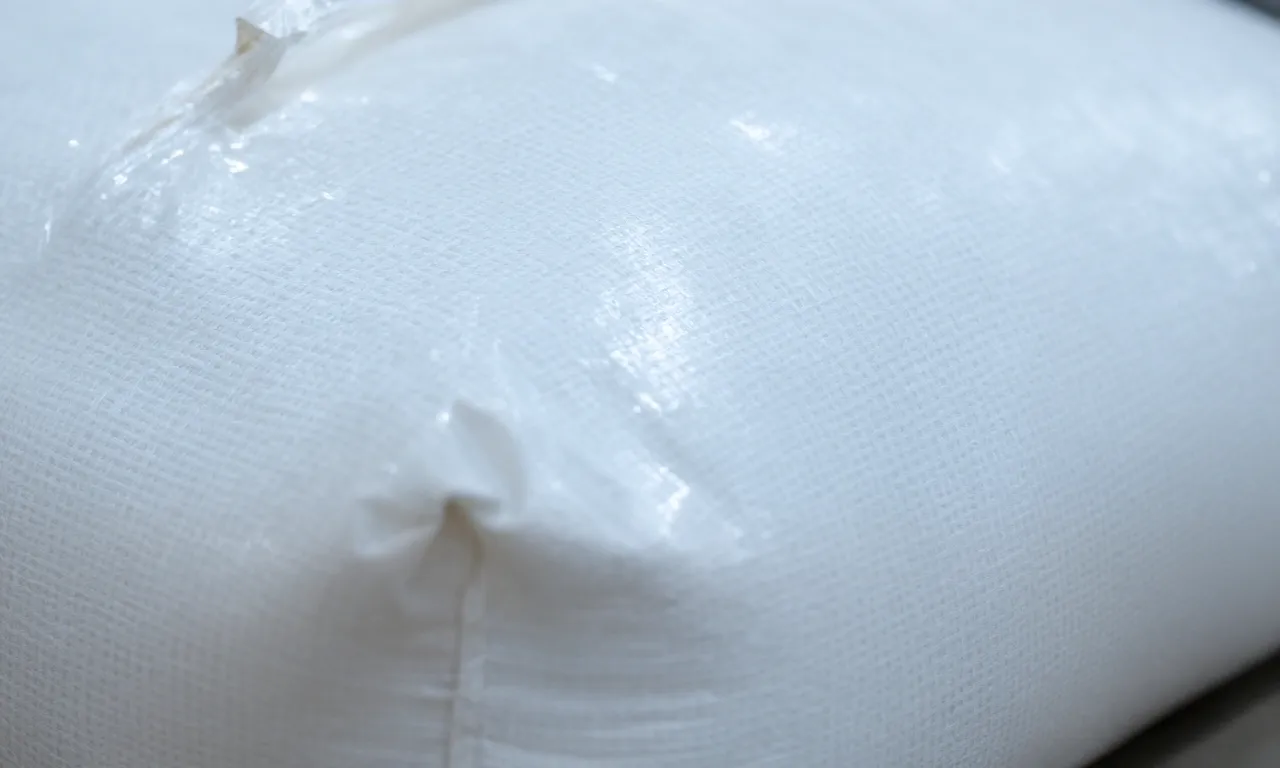
A 1000 kg bag of cement powder and a 1000 kg bag of plastic pellets can be built from the same woven polypropylene fabric — and perform completely differently in service, because of a thin layer of coating. The coating on an FIBC’s fabric determines whether moisture reaches the product, whether fine powder dusts out of the bag, whether the surface will abrade in transport, and whether the bag interior is acceptable for food contact. It is a specification decision that costs cents per bag and decides claims worth thousands.
This guide explains the three fabric surface treatments that dominate FIBC supply — PE lamination, PU coating, and uncoated woven fabric — what each does and does not do, and how to match a coating to the product you actually ship.
Why Coating Matters
Woven polypropylene tape fabric is inherently porous. The weave that gives FIBCs their tensile strength also leaves micro-gaps between tapes that allow moisture vapor, fine particles, and air to pass. Coating is the engineering answer to that porosity, and it changes five properties that matter in bulk packaging:
- Moisture barrier: a coating blocks water vapor ingress, protecting hygroscopic products from caking, clumping, and degradation during 30-45 day container transits.
- Anti-dusting: a coated interior keeps fine powders — cement, lime, carbon black, pigments — from sifting through the weave and coating the bag exterior, the container floor, and the receiving plant.
- Powder flow: coated fabric presents a smoother interior surface, reducing product hang-up in corners and improving complete discharge from the bag.
- Food contact: a clean, non-migrating coating layer is part of what makes a bag fabric acceptable for direct food contact under food-grade regulations.
- Abrasion resistance: surface coatings protect the underlying tapes from scuffing and tearing during handling, stacking, and transport.
The wrong choice in any of these dimensions is a recurring, expensive problem — which is why coating selection belongs at the specification stage, not after a rejected shipment.
PE Laminated Fabric
Polyethylene lamination is the most common FIBC coating, and for good reason: it delivers the best combination of moisture barrier, food-contact compatibility, and cost.
The process applies a thin film of low-density polyethylene (LDPE) to the woven fabric — typically 20-40 microns thick — during or after weaving. Lamination can be applied to one side or both:
- Inner lamination (the standard for most industrial FIBCs): the PE layer faces the product. It provides the moisture barrier, prevents sifting, and gives powders a smooth surface to flow over during discharge.
- Outer lamination: protects the exterior fabric from moisture and abrasion, common where bags sit outdoors or in wet handling environments.
- Double lamination: both faces coated, for maximum barrier performance and surface protection. This is the construction of choice for the most demanding hygroscopic and food products.
PE lamination is the right answer whenever the product must be kept dry, must not dust, or will contact food. Because the PE layer can be manufactured from food-grade resin with documented compliance, PE laminated FIBCs are the standard base for food-contact bulk packaging. The tradeoff: a laminated bag cannot breathe — which is exactly what you want for barrier applications, and exactly wrong for respiring produce.
PU Coated Fabric
Polyurethane (PU) coating is applied as a liquid coating cured onto the fabric surface, producing a tougher, more flexible film than PE lamination.
The defining advantages of PU are abrasion resistance and flexibility. The coating withstands repeated scuffing, flexing, and rough handling without cracking or delaminating, which is why PU-coated fabric shows up on high-cycle and reusable bags — the 6:1 constructions that must survive 5-10 fills, drops, and stackings. PU also adheres well to the PP tapes, so it holds up where PE lamination might peel on aggressive handling.
PU is the right choice for abrasive, sharp, or heavy products — crushed minerals, scrap, aggregates, and chemical products that grind against the bag interior — and for any reusable program where the surface will take repeated abuse. The cost is higher than PE lamination, and PU-coated fabric is less commonly used for food contact than PE, so verify the coating formulation if the product will touch the interior directly.
Uncoated Woven Fabric
Uncoated FIBC fabric is simply the woven PP tapes with no surface treatment. It is the lowest-cost construction, and for many products it is the correct one.
Because uncoated fabric is breathable, it suits dry, free-flowing products that do not need a moisture barrier and are not prone to sifting — grains, seeds, pellets, nuts, and many mineral products with coarse particle sizes. Uncoated bags are also the starting point for ventilated constructions, where breathability is the entire point of the design.
The tradeoffs are real. Uncoated bags dust more: fine material works its way through the weave during filling, transport, and discharge, creating housekeeping and product-loss problems. They provide no moisture barrier, so hygroscopic products are at risk in humid transits. And the weave itself is exposed to abrasion, which shortens life in demanding applications. In short: uncoated is the economical default for products that genuinely do not need protection, and a false economy for products that do.
Coated Fabric vs. a Separate PE Liner
A common procurement question is whether to achieve the barrier with a coated bag or with an uncoated bag plus a loose or form-fit PE liner. The answer depends on how the bag is filled, emptied, and cleaned.
A coated bag puts the barrier in the fabric itself: faster to load, no liner installation step, and the barrier survives discharge cleanly. It is the better choice for high-throughput operations and for products where the bag interior must stay open and clear.
A separate liner adds a replaceable barrier: when the liner is the point of failure or contamination, you replace the liner instead of retiring the bag. Liners also add a second independent barrier layer, which matters for the most moisture-critical products. The costs are the extra installation step and the risk of liner damage during filling. We cover the full liner decision — materials, form factors, and industry selection — in our complete FIBC liner guide.
The practical rule: coated fabric for speed and simplicity, a liner when you need a replaceable barrier or a second layer of defense. For food products requiring both barrier and documented cleanliness, PE liner solutions combined with a coated outer bag are the common specification.
Selection Matrix by Product Type
The fastest way to choose a coating is to match the product’s failure mode to the coating that prevents it:
- Cement, lime, and dusty powders → PE laminated (inner or double). The product dusts aggressively and must stay dry; lamination solves both.
- Hygroscopic powders (soda ash, caustic, fertilizers, dried foods) → PE laminated or coated bag plus liner for maximum barrier. Moisture ingress is the failure mode.
- Fresh produce (potatoes, onions, citrus) → uncoated ventilated fabric. The product needs to breathe, not be sealed; see ventilated FIBCs.
- Abrasive chemicals and minerals → PU coated, especially in reusable programs, for surface durability.
- Dry free-flowing grains and pellets → uncoated is acceptable, with PE lamination only if humidity or sifting becomes a problem.
- Food products → PE laminated with food-grade resin and documented compliance; never recycled-content fabric.
How Coating Interacts with Fabric Weight
Coating choice and fabric weight are linked specifications, not independent ones. A coated bag can sometimes use a lighter base fabric because the coating adds stiffness and tear resistance — but only within the design’s tested limits, since coating does not substitute for the tensile strength the load requires.
The rule to remember: specify the coating for the product, and the fabric weight (GSM) for the load and handling regime. A heavy 200+ GSM fabric with the wrong coating will still let moisture reach a hygroscopic product; a light fabric with a perfect barrier will still fail under load. Our GSM and fabric weight guide explains how fabric weight, coating, and safety factor combine in a correctly specified bag.
How to Verify Coating Quality
Coating failure rarely announces itself at delivery — it shows up as moisture damage, dust, or peeling months later. Three checks at sampling time catch most problems:
- Adhesion: flex the fabric sharply and check whether the coating peels or flakes at the fold. PE lamination should stay bonded through repeated flexing; delamination at the crease is a rejection criterion for any bag that will be handled roughly.
- Pinhole and continuity: hold a coated sample up to light or use a pin-hole tester on a cut sample. Concentrated pinholes or thin spots defeat the barrier in exactly the places moisture will attack first — bag corners and seams.
- Uniformity: check coating thickness across the panel width and from bag to bag in the batch. Coating applied unevenly at the edges is a sign of process drift that will produce intermittent failures in service.
Ask the manufacturer for coating process parameters (resin grade, coating weight or micron range, and lamination method) in the specification sheet. A supplier who cannot state the micron range on the coating cannot control it — and uncontrolled coating is the difference between a moisture claim and a quiet season.
Coating and UN Certification: 13H3 vs. 13H4
Coating choice interacts directly with dangerous-goods certification, and the UN packaging code on the bag tells you which construction you are getting. In the UN marking system, 13H3 denotes flexible woven plastics with a coated body — the outer fabric itself carries the containment barrier. 13H4 denotes flexible woven plastics with a liner — the outer body is uncoated, and containment is provided by an internal liner.
The practical implication: if you need UN certification for a coated bag, the certification must cover the actual coating construction — a certificate for an uncoated 13H4 design does not validate a PE-laminated 13H3 bag, and vice versa. This matters most for chemical and hazardous-powder loads, where the coating or liner is the containment element that the UN tests (drop, stack, tear) actually exercise. When sourcing UN-certified coated bags, request the certificate and verify the packaging code matches the coating spec you ordered. A coated bag also behaves differently in testing than an uncoated one — the coating contributes tear resistance and seam strength — so never assume a certificate transfers across constructions.
The Practical Takeaway
Coating is a product-specification decision disguised as a fabric decision. Write down what the product cannot tolerate — moisture, dusting, abrasion, food-contact limits — and select accordingly: PE lamination for barrier and food contact, PU for durability on high-cycle bags, and uncoated fabric only where breathability or cost genuinely wins. When in doubt, ask the manufacturer for a coating recommendation tied to your product’s moisture and dusting behavior; the cents-per-bag difference between coating types is trivial compared to the cost of a failed shipment.