Automated FIBC Filling: Robotic Lines, Palletizing, and Design for Automation
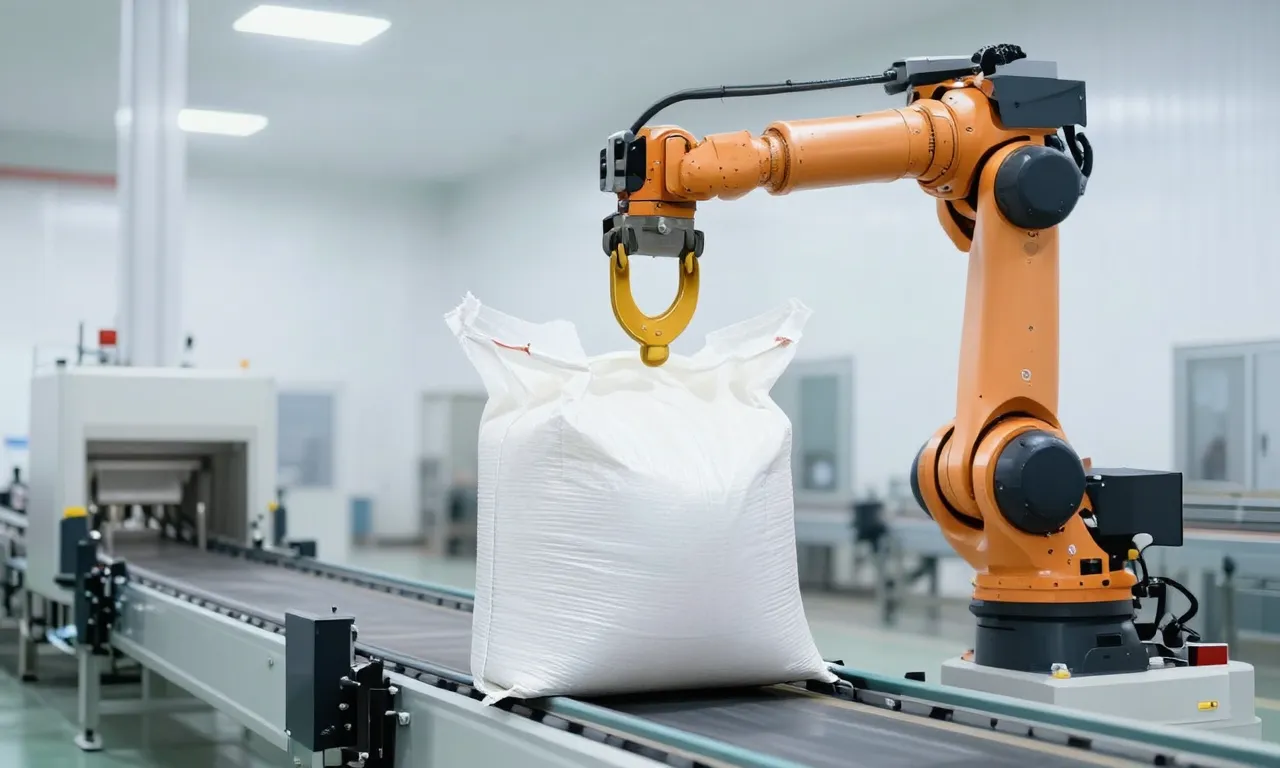
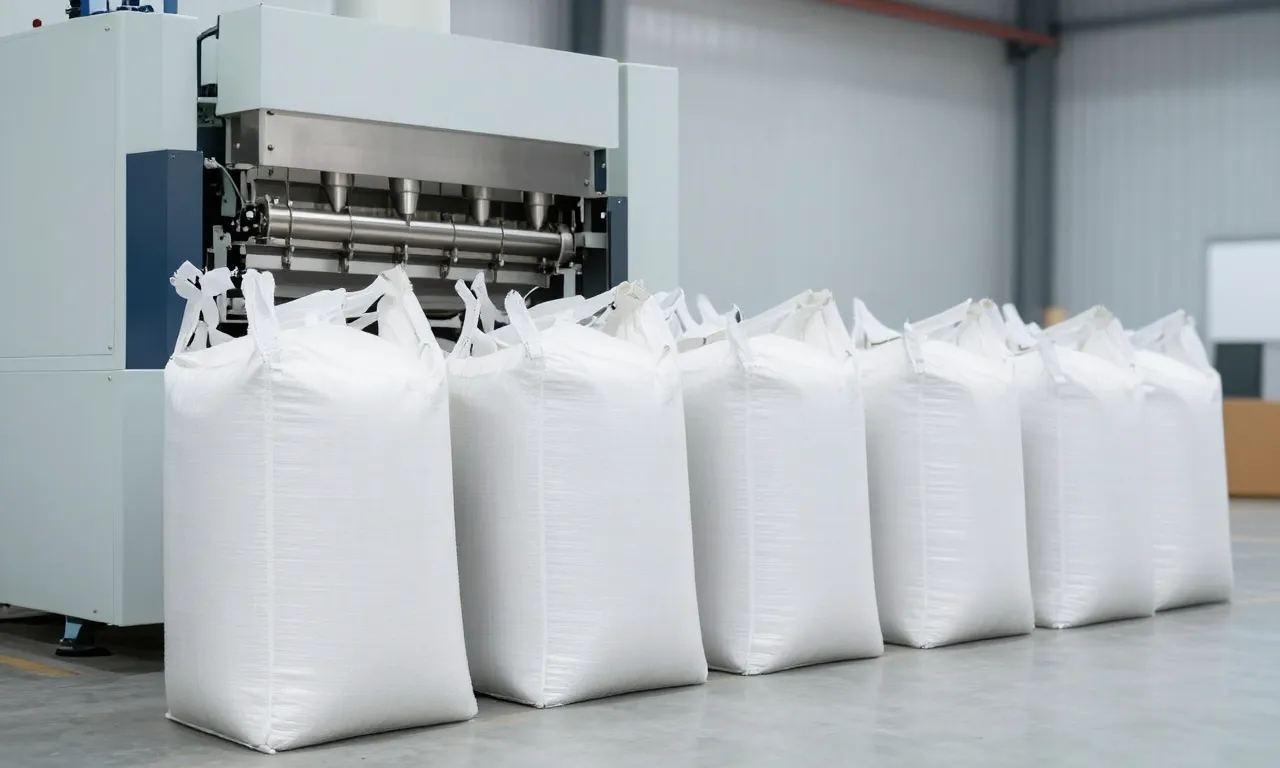
A filling line that runs three shifts with manual bag hanging, filling, and palletizing processes around 300-400 bags per day — and each bag requires a worker to lift, position, and connect lifting loops that are often at shoulder height with a 1000 kg load behind them. The same line, automated, runs 1,000 bags per day with one operator supervising the station. The gap between those two numbers is why automated FIBC filling is no longer a specialty purchase: it is the default engineering question for any new bulk packaging line.
This guide covers why plants automate FIBC handling, the filling equipment types available, how bag design changes when robots do the work, and the ROI benchmarks that justify the investment.
Why Automate FIBC Filling
Three pressures drive automation, and they compound in high-volume plants:
- Labor cost and availability. Manual FIBC lines need operators for hanging, filling, and palletizing — typically 2-4 people per line. Automated lines run with 1-2 supervisors across multiple stations. In markets where packaging labor is scarce or expensive, the labor saving alone funds the investment.
- Throughput. Manual lines realistically run 300-400 bags per day per station; automated lines reach 1,000 bags per day and beyond, with consistent cycle times that make downstream scheduling predictable.
- Safety. Manual loop handling is the highest-risk task on a packaging floor. Workers stand beside a bag that can weigh over a tonne, connect and release lifting loops at shoulder height, and guide loads that swing during lifting. Removing the person from that zone eliminates the most common class of serious FIBC injuries. Automated gripping, lifting, and transfer also reduce the ergonomic strain of repetitive hanging and unhooking.
The automation decision is rarely about a single factor. Plants that automate typically report throughput gains of 2-3x, labor reductions of 50-70%, and a step change in lifting safety — and the bag specification is what makes or breaks all three.
Filling Equipment Types: Matching the Machine to the Product
Automated filling stations come in three dominant types, and the product’s flow and dusting behavior decides which one belongs on the line:
- Gravity spout fillers are the simplest and fastest: product flows by gravity from a hopper through a spout into the bag. They suit free-flowing granular products (pellets, grains, seeds) and achieve the highest cycle rates, but they generate dust on fine powders and offer no control over flow rate.
- Pneumatic conveying fillers move product through a closed line into the bag using air. They handle fine, dusty powders cleanly and can be sealed to the bag spout, but they require a filtration/venting system and are slower per cycle.
- Screw/auger fillers meter product with a rotating screw, giving precise weight control and the ability to handle cohesive or semi-free-flowing materials. They are slower than gravity but deliver the consistent fill weights that automated downstream palletizing requires.
Match the filler to the product’s dusting and flow characteristics first, then to throughput. A plant that pairs a gravity filler with a fine hygroscopic powder will spend its time on dust control; a plant that pairs an auger with free-flowing pellets leaves throughput on the table. For dusty products, a sealed spout connection and integrated dust collection are specification items, not options.
Bag Design for Automation: Baffle Bags and Panel Geometry
Once a robot handles the bag, the bag’s geometry becomes part of the machine. Two design decisions dominate.
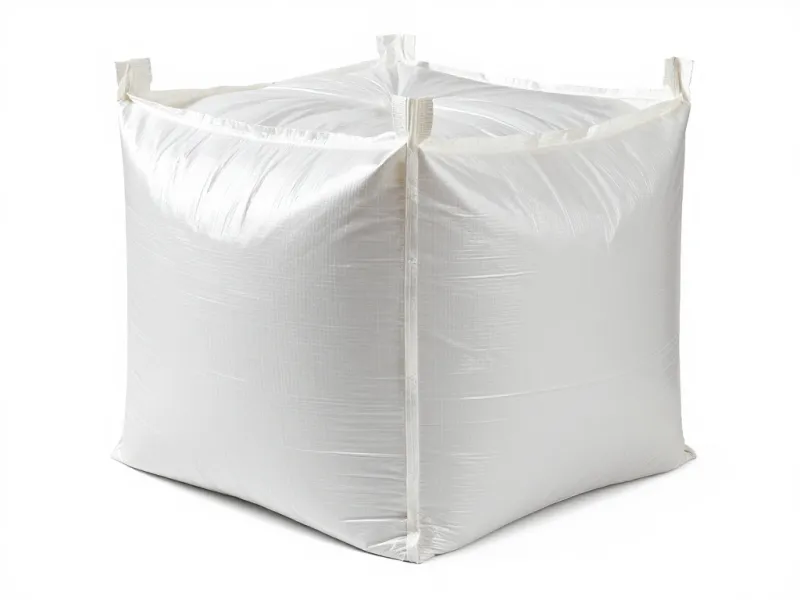
Baffle bags stand up unattended. A baffle bag has internal baffle panels sewn across the body that keep the bag’s cross-section square when empty and during filling. For automation this is decisive: the bag can be held open, positioned, and filled without manual support or inflating frames, because it holds its shape. Non-baffle bags collapse and must be suspended or inflated during filling, which complicates every automated step. Our comparison of baffle vs U-panel construction explains the structural differences; for automated lines, the practical takeaway is that baffle bags are the standard choice because they simplify hanging, filling, and discharge stations alike.
Panel geometry affects line fit. 4-panel bags fill square and stack square, which makes them the default for automated palletizing — their rectangular footprint packs predictably on a pallet and in a container. U-panel bags are lighter and cheaper to build and suit lower-speed or semi-automated lines, but their cross-section is less consistent when filled, which complicates tight pallet patterns. Rule of thumb: 4-panel for fully automated, high-throughput lines; U-panel where cost per bag outweighs line-speed considerations.
Loop Engineering for Robotic Grip
Robots grip FIBCs by the lifting loops — and loops engineered for a human hand are not automatically loops engineered for a gripper. Three specifications matter:
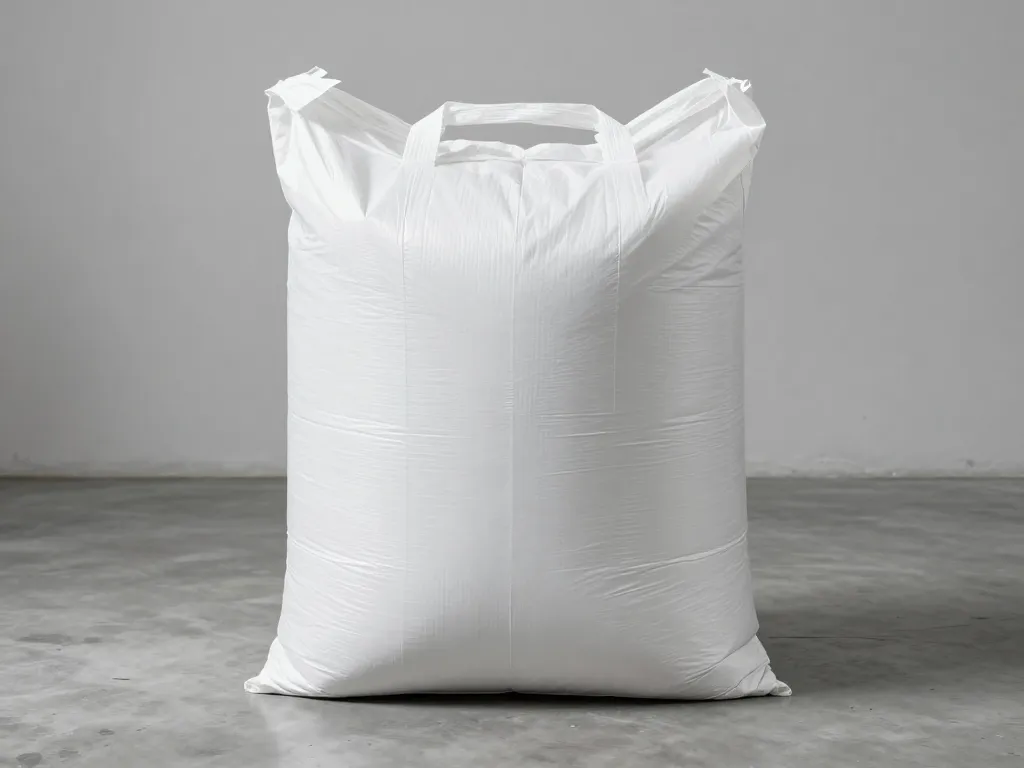
- Loop length: automated grippers need loops in the 150-300 mm range to achieve a positive grip. Loops at the short end of that range are easier for a robot to grasp firmly; loops outside it can be missed or grabbed at an angle, causing misalignment.
- Reinforced loops: loops on automated lines are lifted and lowered hundreds of times per day with the same motion, so reinforcement at the loop-to-bag attachment and consistent strap width are critical. Specify reinforced double-folded loops and confirm the SWL rating covers robotic lifting dynamics, which can momentarily exceed static load.
- Consistent loop geometry: robots work from programmed positions. If loop length or placement varies bag to bag, the gripper misaligns. Specify tight loop tolerances (typically ±10 mm on length and placement) in the bag spec, and require the same geometry across batches — this is a documentation item, not just a drawing item.
Loop consistency is also a quality-control requirement: automated lines amplify bag variability instead of absorbing it, so an inspection regime that checks loop placement on a sample basis becomes a per-batch check.
Palletizing, Strapping, and Labeling Integration
The filled bag leaves the filling station and enters a palletizing and securing system, and the bag design must stay compatible through that chain:
- Palletizing: robots place filled bags in defined patterns. Square-filled 4-panel bags produce stable, tight patterns; unevenly filled bags create unstable stacks. Fill-weight consistency from the metering system is what keeps pallets square.
- Strapping: automated strapping applies tension around the pallet. Bags must have enough surface integrity (no protruding loose fabric) that strapping does not catch or tear the bag during tensioning.
- Labeling: automated labeling applies printed labels or RFID tags to a defined bag position. Specify a consistent label panel area and bag-side orientation so the labeling robot hits the same spot every cycle. Pre-printed or in-line printed markings must be readable after palletizing and strapping.
The integration rule: every automated station downstream reads the bag’s geometry and consistency. Design the bag so that its shape, loops, and label area are uniform, and the whole line runs; let any of them drift, and the robot, strapper, or labeler will find it first.
Documentation for IFS/ISO Plants
Automated lines in audited facilities — IFS, BRC, ISO 9001, and GMP-adjacent environments — need documentation that matches the equipment’s expectations:
- Consistent dimensions and weights: tolerance statements for bag width, height, loop placement, and empty weight, so line programming is stable across batches.
- Material and compliance certificates: fabric, coating, and liner compliance documents that the plant’s quality system requires for incoming packaging.
- Batch traceability: lot numbers and production dates traceable from the bag to the line, supporting recall and audit requirements.
- Handling and storage instructions: loop orientation, stacking limits, and storage conditions that keep bags within spec between receipt and use.
Buyers automating a line should request these documents at the RFQ stage and specify tolerances in the purchase order — a bag that meets visual standards but varies in loop placement will fail on the line even though it is “in spec” by general industry standards.
ROI Benchmarks
The economics of automated FIBC filling are well established. At 300+ bags per day, the typical payback on a filling-and-palletizing automation project is 12-24 months — faster where labor is expensive or the line runs multiple shifts. The largest single line item is labor: packaging labor as a share of total packaging cost drops from roughly 15-20% on manual lines to about 8% automated, a reduction that compounds across shifts and years. Throughput gains of 2-3x then flow through to lower cost per bag, shorter order cycles, and fewer changeovers.
The caveat is that ROI projections only hold if the bag is specified for automation from day one. Retrofitting a line to bags with inconsistent loops or collapsing non-baffle bodies converts a 12-month payback into an 18-24-month one — or worse, a line that never reaches rated throughput. Automation plants that succeed treat the bag spec as part of the machine design, not as a commodity purchase.
Line Layout: From Bag Magazine to Palled Bag
An automated FIBC line is a sequence of stations, and the bag spec must be compatible with every one of them:
- Bag magazine and presentation: a stack of empty bags is presented one at a time, usually with a mechanical opener that spreads the top before the spout connects. Bags with consistent dimensions and a clean, undistorted fill spout feed this station reliably; bags with wavy panel geometry jam the magazine.
- Spout connection: the fill spout is connected to the filler, either clamped or with a quick-connect fitting. Automated connection favors a fill spout of standard length and diameter with a smooth profile — specify spout dimensions in the bag spec so the station hardware matches.
- Filling: product is metered in, with the filler type matched to the product as described above. During filling, deaeration or compaction may be applied — a vibrating table or deaeration probes settle the product and recover volume. This matters for automation because compacted bags fill square and stack flat; uncompacted bags settle in transit and destabilize pallets. If your line includes compaction, the bag must tolerate the vibration without seam stress — specify this in the design review.
- Discharge and transfer: the filled bag is weighed, the spout is closed automatically, and the bag is transferred to the palletizer. Consistent bag height after filling (driven by fill-weight accuracy) is what keeps the transfer and stacking sequence on program.
- Palletizing, strapping, labeling: as covered above, the bag’s square footprint, surface integrity, and label panel keep these stations running.
When specifying bags for a new line, walk the bag spec through these five stations with the line integrator before ordering. The cost of changing the bag spec after the line is built is an order of magnitude higher than changing it before.
Changeover and Multi-Product Lines
Lines that run multiple products or bag sizes add a changeover requirement to the automation equation. Robots and filling hardware can be programmed for multiple bag formats, but the changeover is only fast if the bag geometries share consistent design rules — same loop length range, same spout style, same label panel position, differing only in dimensions.
For plants running several products in modest volumes, mini FIBCs (typically 200-500 kg) reduce changeover frequency and cost: smaller batches finish sooner, and the line switches products without the leftover-product and cleaning burden of a full-size bag run. The same design-for-automation rules apply — baffle construction, consistent loops, documented dimensions — at mini-bag scale. Where a line runs both full-size and mini bags, confirm the gripper and magazine handle both ranges, and consider a common loop length band across sizes so the robotic gripper needs only one end-effector. Changeover time is a hidden ROI driver: every hour of changeover is an hour of lost throughput, and bag design that shortens changeover pays back in the same 12-24 month window as the main automation investment.
The Practical Takeaway
Automated FIBC filling rewards bags that behave predictably: baffle construction for shape, 4-panel geometry for stacking, reinforced 150-300 mm loops with tight tolerances for robot grip, and documented dimensions for line programming. Match the filler type to the product’s dusting and flow, integrate palletizing and labeling as part of the bag spec, and plan for a 12-24 month payback at 300+ bags per day. When the bag is designed for the machine, the machine runs at rated throughput — and the labor, safety, and consistency gains follow automatically.