FIBC Ventilato (Big Bag Traspirante)
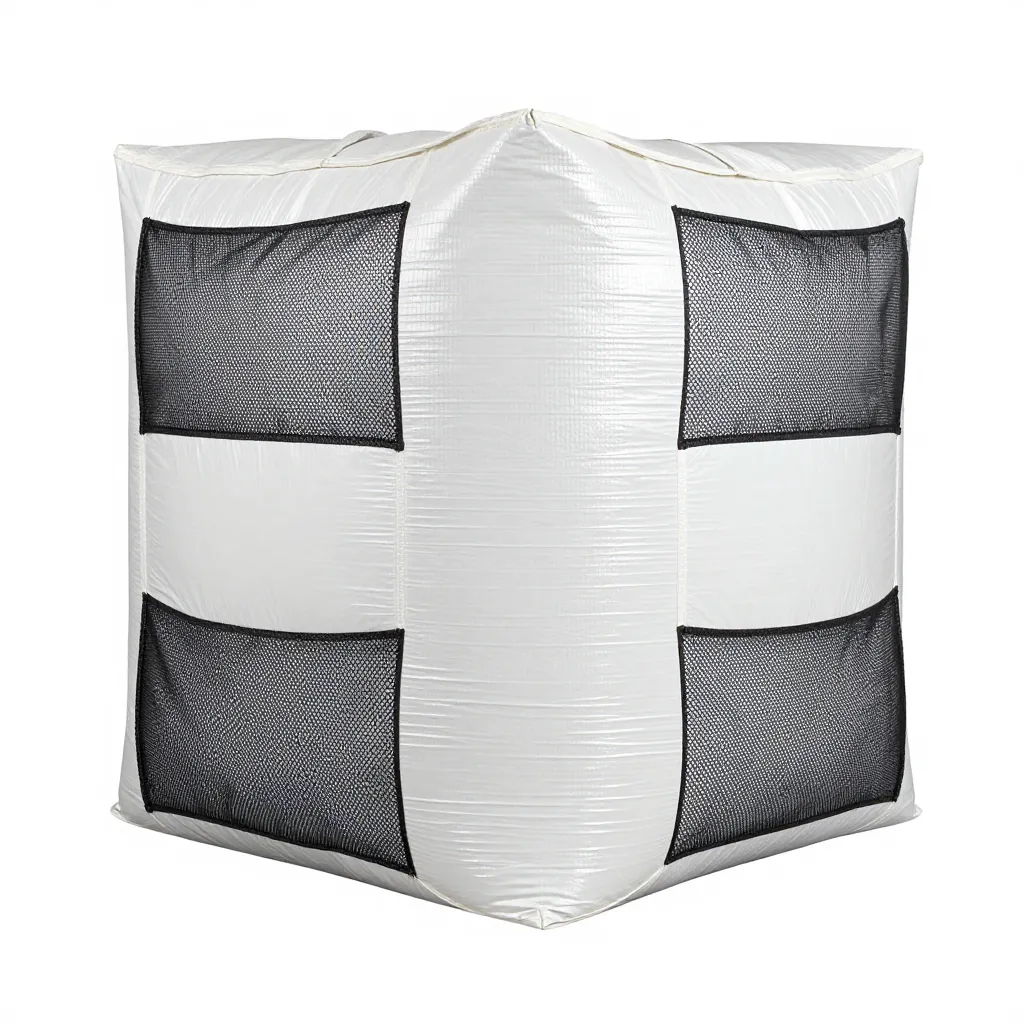
Sacchi FIBC ventilati con pannelli a rete traspirante integrati per prodotti agricoli, verdure fresche e materiali sfusi sensibili all'umidità. Previene condensa, deterioramento e muffa durante trasporto e stoccaggio.
Specifiche
- SWL
- 500-2000 kg
- Safety Factor
- 5:1 (6:1 reusable)
- Fabric Weight
- 160-220 gsm
- Ventilation Type
- Integrated mesh panels / coated-uncoated strips
- Panel Construction
- U-panel / 4-panel / Circular
- UV Stabilization
- 1-3%
- Airflow Coverage
- 10-50% panel surface area
Caratteristiche
- Integrated ventilation mesh or breathable strip panels
- Prevents condensation and moisture buildup during transit
- Reduces produce spoilage and mold growth
- UV stabilized for outdoor storage without degradation
- Available in food-grade construction for direct produce contact
Applicazioni
Settori di Destinazione
The Ventilated FIBC (breathable bulk bag) is designed for agricultural products, fresh produce, and moisture-sensitive bulk materials that require continuous airflow during storage and transport. Unlike standard sealed FIBCs that trap humidity and cause condensation, ventilated bags incorporate integrated mesh panels or breathable fabric strips that allow air circulation through the bag body — reducing spoilage, mold growth, and product degradation while maintaining full structural integrity.
Ventilation Construction: How Breathable FIBCs Work
Ventilated FIBCs achieve airflow through two primary construction methods, each suited to different product requirements.
Integrated Mesh Panels
The most common design replaces sections of the polypropylene fabric body with high-strength ventilation mesh. These mesh panels are strategically positioned — typically along the side walls — to maximize cross-ventilation. The mesh is knitted or woven from UV-stabilized polypropylene or polyester yarns, engineered to provide sufficient open area for airflow while maintaining the bag’s tensile strength and safe working load capacity.
Mesh panel coverage typically ranges from 10% to 50% of the panel surface area, configured based on the product’s respiration rate and moisture content. Bags for potatoes, which generate significant heat and humidity, typically use higher ventilation coverage (30-50%). Bags for drier products like wood chips may use lower coverage (10-20%).
Coated/Uncoated Breathable Strips
An alternative construction method uses alternating coated and uncoated fabric strips woven into the bag body. The uncoated strips allow air passage while the coated strips provide the primary load-bearing structure. This method produces a more uniform appearance than mesh panels and can be easier to handle with standard filling equipment, though it typically provides lower overall airflow than dedicated mesh panels.
Both construction types are available in standard FIBC configurations — U-panel, 4-panel, and circular — with the same safe working load ratings of 500 to 2000 kg and safety factors of 5:1 (single-use) or 6:1 (reusable).
Produce-Specific Ventilation Requirements
Different agricultural products have distinct airflow needs. The following table summarizes common produce types and their ventilation requirements:
- Potatoes: High respiration rate, significant heat generation. Require 30-50% ventilation coverage. Mesh-panel ventilated FIBCs are the standard. Storage temperature 4-8°C; ventilation prevents condensation during warm-up cycles.
- Onions: Moderate respiration, sensitive to humidity. Require 20-30% ventilation coverage. Both mesh-panel and coated/uncoated strip designs are effective. Critical to prevent neck rot from trapped moisture.
- Carrots: High moisture content, prone to dehydration if over-ventilated. Balance needed: 15-25% coverage. Often benefit from partial ventilation combined with moisture-retention liners.
- Citrus: Moderate respiration, ethylene-sensitive. 20-30% coverage. Ventilation helps dissipate ethylene gas that accelerates ripening and spoilage.
- Animal Feed / Grains: Low-to-moderate moisture. 10-20% ventilation coverage sufficient. Primary concern is preventing mold at contact points with bag fabric.
Food-Grade Compliance for Agricultural FIBCs
For produce intended for human consumption, ventilated FIBCs must meet food-grade standards. This requires bags manufactured from virgin polypropylene — no recycled content — in facilities with documented cleanliness and contamination control procedures. The mesh panels themselves must use food-safe yarns that will not transfer chemicals or odors to the produce.
Food-grade FIBCs carry additional requirements including batch traceability, certificate of analysis documentation, and compliance with FDA 21 CFR and EU Regulation (EC) No 1935/2004 for food contact materials. When specifying ventilated bags for direct produce contact, both the ventilation design and the food-grade certification must be confirmed with the manufacturer.
UV Protection and Outdoor Storage
Agricultural FIBCs are frequently stored outdoors at farms, packing facilities, and distribution centers. UV stabilization at 1-3% is essential to prevent polypropylene degradation from sunlight exposure. Without UV stabilization, standard PP fabric loses 50% or more of its tensile strength within 2-3 months of continuous outdoor exposure. UV-stabilized ventilated FIBCs maintain structural integrity for 6-12 months of outdoor storage, depending on geographic location and exposure intensity.
Moisture and Condensation Management
The core benefit of ventilated FIBCs is moisture management. When a sealed FIBC containing respiring produce moves between temperature zones — from a cold storage facility to a warm loading dock, or during cross-climate transport — the temperature differential causes condensation to form inside the bag. This moisture accelerates spoilage, promotes mold, and can degrade the bag fabric itself.
Ventilated bags prevent this by equalizing temperature and humidity between the bag interior and the external environment. Air circulation carries moisture away from the product, maintaining a stable microclimate inside the bag. For products with specific humidity requirements, ventilation coverage can be customized — higher coverage for rapid moisture removal, lower coverage for products that benefit from some humidity retention.
Selection Guidance
When selecting a ventilated FIBC, consider these factors in order:
- Product respiration rate: High-respiration products (potatoes, fresh greens) need maximum ventilation. Low-respiration products (dried grains, wood chips) need less.
- Transport duration and climate: Long-haul transport across climate zones requires higher ventilation capacity. Short local transport may need less.
- Food-grade requirement: Direct produce contact → mandatory food-grade construction with virgin PP and food-safe mesh yarns.
- Storage environment: Outdoor storage → UV stabilization required. Refrigerated storage → confirm bag materials perform at cold temperatures.
- Handling equipment compatibility: Confirm the ventilated design (mesh panel placement, strip pattern) is compatible with your filling and discharge equipment.
For standard agricultural applications, a U-panel ventilated FIBC with 30% mesh panel coverage, food-grade virgin PP construction, and 1-3% UV stabilization provides the optimal balance of airflow, strength, and cost-effectiveness across a wide range of produce types.