FIBC vs Rigid Containers: Cost and Efficiency Compared
Choosing the wrong bulk packaging container can quietly drain profit from every shipment your business makes. The debate between FIBC vs rigid containers is not academic — it is a decision that shapes your per-ton shipping costs, warehouse footprint, handling labor, and even your environmental compliance posture. Flexible Intermediate Bulk Containers (FIBCs) and rigid Intermediate Bulk Containers (IBCs) both move dry and liquid bulk materials at industrial scale, but they differ dramatically in cost structure, operational flexibility, and total cost of ownership. This comparison breaks down every factor that matters so you can make the right call for your operation.
What Are FIBC Bags and Rigid IBCs?
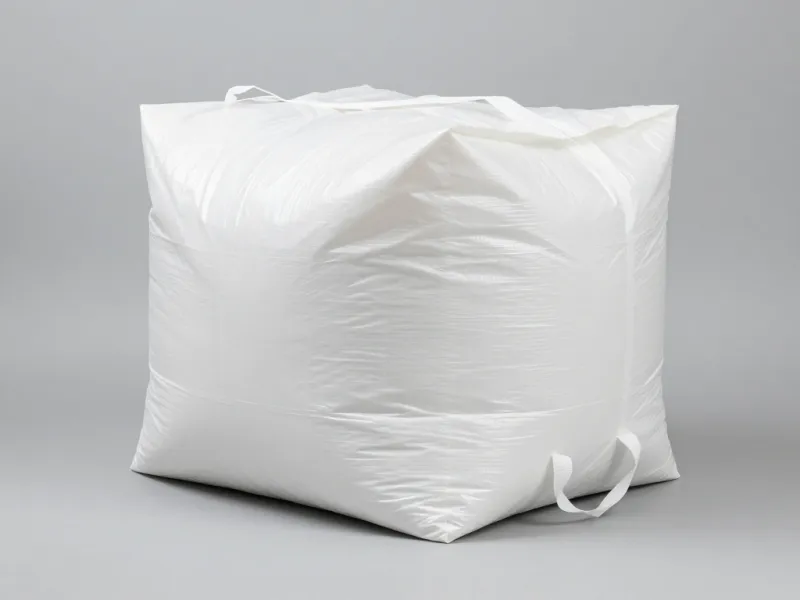
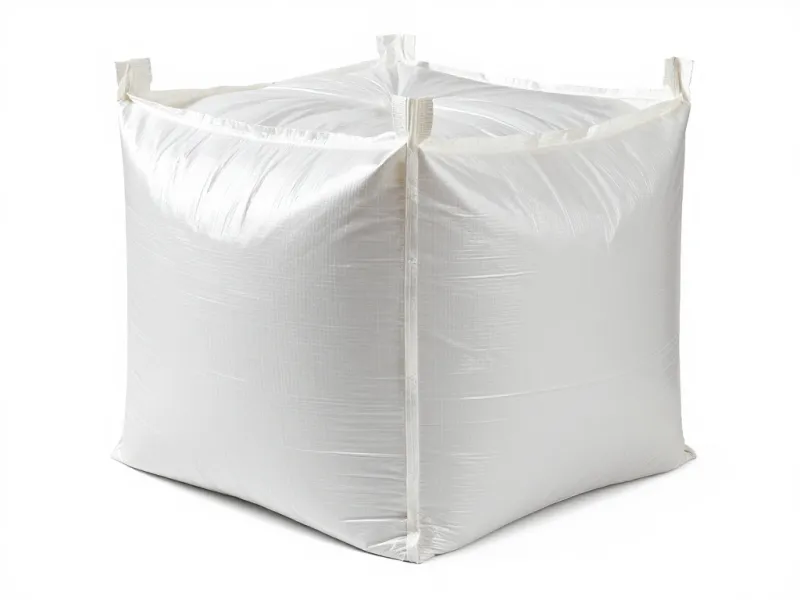
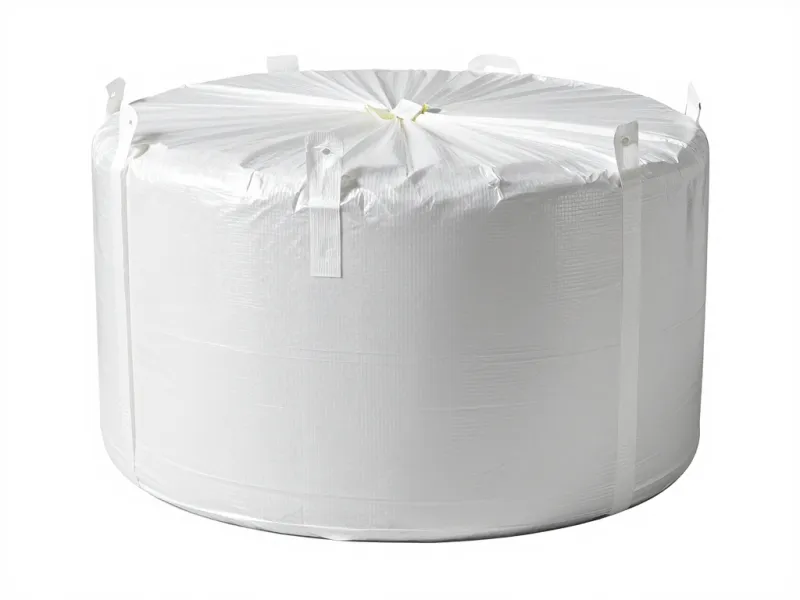
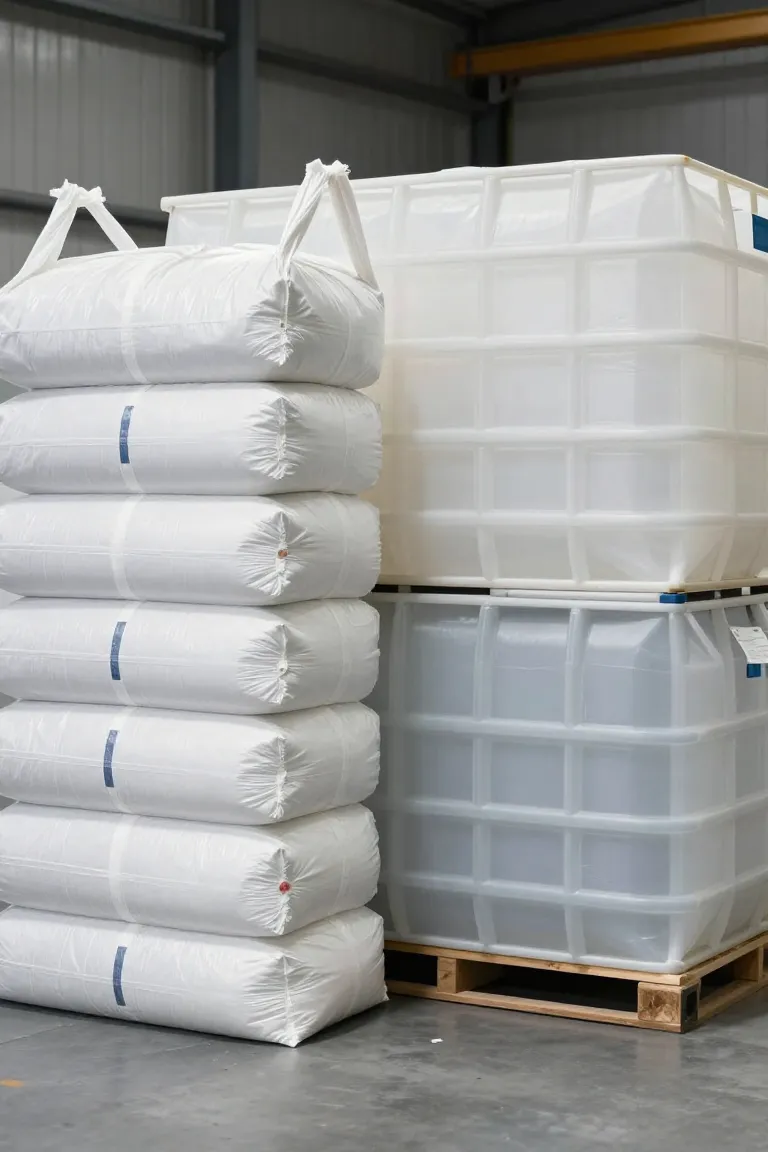
FIBC bags, commonly known as jumbo bags, bulk bags, or super sacks, are large woven polypropylene containers designed to transport and store dry bulk materials weighing between 500 and 2,000 kilograms. They are lightweight, flexible, and collapsible, which means an empty FIBC folds down to a flat package that occupies roughly one percent of its filled volume. FIBCs come in a variety of types of FIBC bags, including U-panel, circular, baffle, and conductive constructions, each engineered for specific product characteristics and handling conditions.
Rigid IBCs are hard-shell containers typically made from high-density polyethylene (HDPE), stainless steel, or carbon steel. They hold between 500 and 3,000 liters and are used for both dry and liquid products. Rigid IBCs feature a solid frame, integrated pallet base, and often include a discharge valve or faucet. They are designed for repeated use over many trips and are common in the chemical, food, and pharmaceutical industries where hygiene and product protection standards are strict.
Both container types serve the same fundamental purpose — moving bulk quantities of material efficiently — but they approach the challenge from opposite design philosophies. FIBCs prioritize lightweight flexibility and low per-trip cost. Rigid IBCs prioritize durability and reuse. The right choice depends entirely on your product, logistics, and financial requirements.
Why This Comparison Matters for Your Bottom Line
Cost
The cost gap between FIBCs and rigid containers is substantial at every stage of the supply chain. A standard single-trip FIBC bag costs between $3 and $12 per unit depending on specifications, printing, and order volume. A rigid IBC container costs $150 to $500 or more for a new unit. Even when a rigid IBC is reused 30 to 50 times, the amortized per-trip cost ranges from $3 to $17 — competitive with FIBCs only if every return trip is fully utilized and the container never needs major repair.
Beyond the container itself, filling and handling labor costs favor FIBCs. Filling a single FIBC replaces filling 20 to 80 small bags, reducing repetitive labor. Rigid IBCs offer similar labor savings per unit, but their heavier weight increases forklift fuel consumption and wear on handling equipment. Insurance and damage costs also differ: a damaged FIBC is simply replaced at low cost, while a damaged rigid IBC requires inspection, repair, or retirement, each of which adds expense and administrative overhead.
Storage Efficiency
Storage space is a hidden cost center that many businesses underestimate. Empty FIBCs fold flat and can be stored in stacks of several hundred per pallet. A warehouse shelf that holds 10 empty rigid IBCs can hold 500 or more empty FIBCs in the same footprint. This difference is critical for operations with seasonal demand fluctuations that need to maintain packaging inventory between peak periods.
Filled storage also favors FIBCs in many scenarios. Because FIBCs conform to their contents, they can be filled to maximize pallet and container volume. Rigid IBCs have fixed internal dimensions regardless of fill level, so partially filled rigid containers waste space proportionally. For operations shipping variable quantities per order, FIBCs allow you to fill to the exact weight needed without paying for unused container volume.
Logistics and Transportation
Transportation is where the FIBC vs rigid containers comparison becomes most decisive. A standard 20-foot shipping container holds roughly 12 to 20 metric tons of product in FIBCs. The same container loaded with rigid IBCs carries less product by weight because the containers themselves are heavy — a rigid IBC weighs 50 to 80 kilograms empty, while an FIBC weighs only 1 to 3 kilograms. This weight difference translates directly into higher per-ton freight costs for rigid IBCs.
Return logistics further widen the gap. Empty FIBCs can be compressed, baled, and shipped back at minimal cost, or simply recycled locally. Empty rigid IBCs must be returned intact, occupying the same volume as a full unit. For international shipments where return freight is expensive, this single factor can make rigid IBCs economically unviable unless you operate a closed-loop system with guaranteed return volume.
Environmental Impact
Sustainability is increasingly important in procurement decisions. FIBCs are manufactured from woven polypropylene, a recyclable material. At end of life, they can be ground and reprocessed into industrial products such as park benches, pallets, or construction materials. Single-trip FIBCs have a relatively low carbon footprint per use because they are light to transport and require minimal material input.
Rigid IBCs have a higher initial environmental footprint due to the energy and raw materials required to produce them. However, their reusability means that over a full lifecycle of 30 to 50 trips, the per-trip environmental impact can be competitive. The challenge is that many rigid IBCs are retired early due to damage, contamination, or regulatory requirements, which reduces their actual reuse rate below the theoretical maximum. In practice, both options can be environmentally responsible when managed well, but FIBCs offer a simpler and more predictable sustainability profile for most open-loop supply chains.
Detailed Comparison
| Factor | FIBC Bags | Rigid IBCs |
|---|---|---|
| Unit cost | $3–$12 per bag | $150–$500+ per container |
| Weight (empty) | 1–3 kg | 50–80 kg |
| Capacity | 500–2,000 kg | 500–3,000 liters |
| Folded storage | Hundreds per pallet | Not collapsible |
| Product types | Dry bulk, powders, granules | Dry bulk, liquids, pastes |
| Reuse potential | Single-trip standard; multi-trip available | 30–50+ trips |
| Moisture protection | Requires liner or coating | Inherent with sealed design |
| UN hazardous goods | Certified options available | Widely certified |
| Customization | High (size, coating, loops, printing) | Limited (standard sizes) |
| Freight efficiency | Excellent (lightweight, compact returns) | Lower (heavy, fixed volume) |
| Disposal | Recyclable polypropylene | Recyclable but bulky |
Product compatibility is a key differentiator. FIBCs excel with dry, free-flowing materials such as grains, resins, minerals, sugars, and construction aggregates — materials commonly discussed in our FIBC in construction guide. Rigid IBCs are better suited for liquids, semi-solids, and products that require an airtight seal or strict temperature control. If your product is a liquid or needs hermetic containment, rigid IBCs may be the only viable option regardless of cost.
Safety considerations also differ. FIBCs are tested to rigorous standards including ISO 21898 and undergo safety factor testing at 5:1 or 6:1 ratios for single-trip and multi-trip use respectively. They are safe when used within their rated capacity and handled according to manufacturer guidelines. Rigid IBCs provide physical protection that FIBCs cannot match — a rigid container shields its contents from puncture and compression damage during transport. For fragile or hazardous products, this structural protection may justify the higher cost.
How to Decide Which Is Right for You
The decision between FIBCs and rigid containers comes down to four practical questions. First, what is your product? If it is a dry bulk solid, FIBCs are almost always the more cost-effective choice. If it is a liquid or requires a sealed environment, rigid IBCs are the practical option. Second, what is your shipping pattern? Long one-way shipments favor FIBCs due to low return logistics cost. Closed-loop systems with regular return routes can make rigid IBCs economical through reuse. Third, what is your volume? High-volume operations benefit most from FIBC cost savings, while lower-volume specialty operations may find rigid IBCs easier to manage. Fourth, what are your regulatory requirements? Certain hazardous materials and food-grade products have specific container certification requirements that may favor one option over the other.
For most businesses handling dry bulk materials, FIBCs deliver lower total cost per ton shipped. Explore our product range to find FIBC specifications that match your requirements. For mixed operations that handle both dry and liquid products, a combination approach — FIBCs for dry goods and rigid IBCs for liquids — often delivers the best overall economics.
Frequently Asked Questions
Can FIBC bags hold liquids? Standard FIBCs are designed for dry bulk materials. However, specially designed FIBCs with internal liners can hold certain liquid and semi-liquid products. For most liquid applications, rigid IBCs remain the more reliable and widely accepted solution.
How many times can a rigid IBC be reused? A well-maintained rigid IBC made from stainless steel or HDPE can be reused 30 to 50 times or more. The actual number depends on the product carried, cleaning procedures, handling care, and regulatory inspection requirements. Each reuse cycle should include a visual inspection and, for food or chemical applications, a certified cleaning process.
Are FIBCs safe for food-grade products? Yes. Food-grade FIBCs are manufactured in clean-room conditions using virgin polypropylene and comply with FDA, EU, and BRC food safety regulations. They often include internal liners for additional product protection. Always verify that your FIBC supplier provides the appropriate food-grade certification for your market.
Which is more environmentally friendly: FIBCs or rigid IBCs? Both have environmental merits. FIBCs have a lower per-trip carbon footprint due to their light weight and low material input. Rigid IBCs can achieve comparable per-trip impact if reused to their full potential. The practical answer depends on your supply chain: in open-loop systems where containers are not returned, FIBCs are clearly better. In tightly controlled closed-loop systems, rigid IBCs can compete on sustainability.
What is the lead time difference between ordering FIBCs and rigid IBCs? Custom FIBCs typically have a lead time of 3 to 6 weeks from order to delivery, depending on specifications and order volume. Standard rigid IBCs are often available from stock, but custom configurations can take 6 to 10 weeks. For urgent needs, both types are available in standard configurations from distributor inventory.
Ready to Optimize Your Bulk Packaging?
The FIBC vs rigid containers decision is not about which is universally better — it is about which is right for your specific products, logistics, and budget. For the majority of dry bulk applications, FIBCs deliver measurable savings in cost, storage, and transportation while maintaining the safety and quality standards your operation demands. Browse our product range to compare FIBC options, or contact the FIBC Sourcing Team for a personalized packaging assessment tailored to your supply chain requirements.