Self-Closing FIBCs: Design, Mechanics, and When They Pay Off
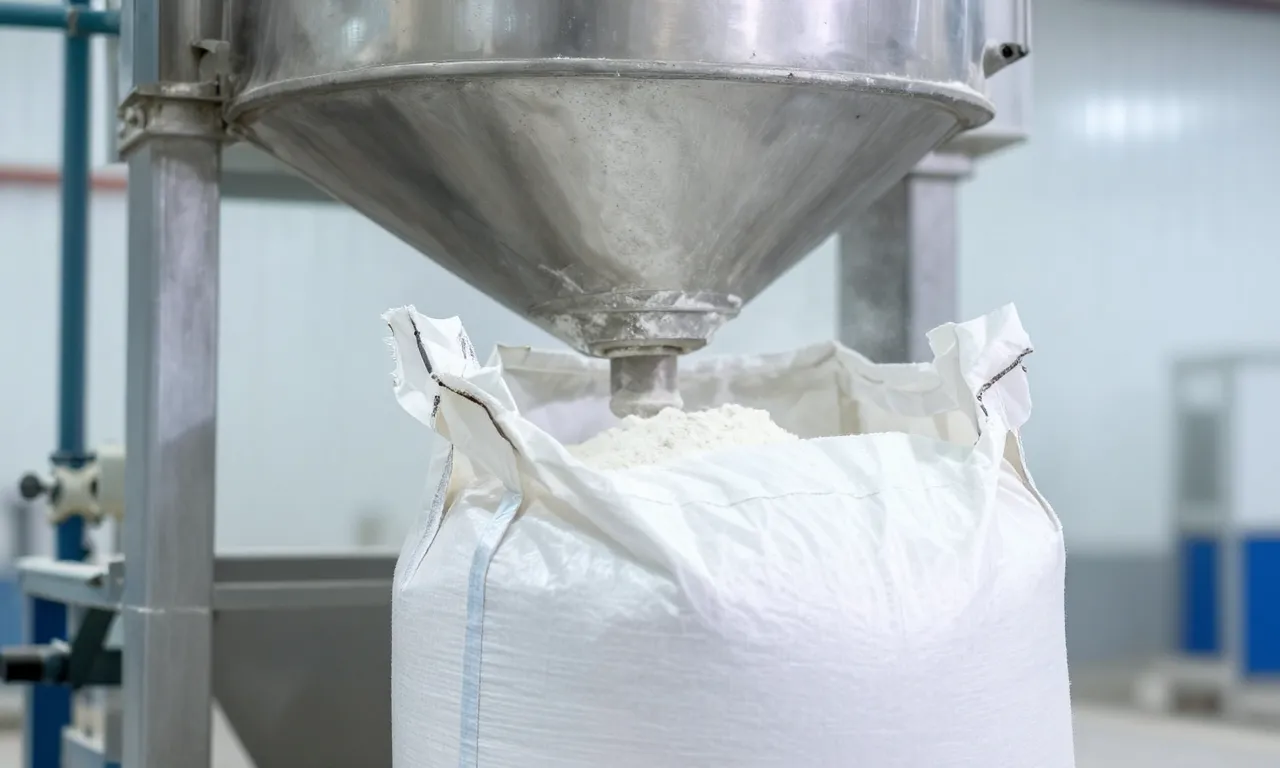
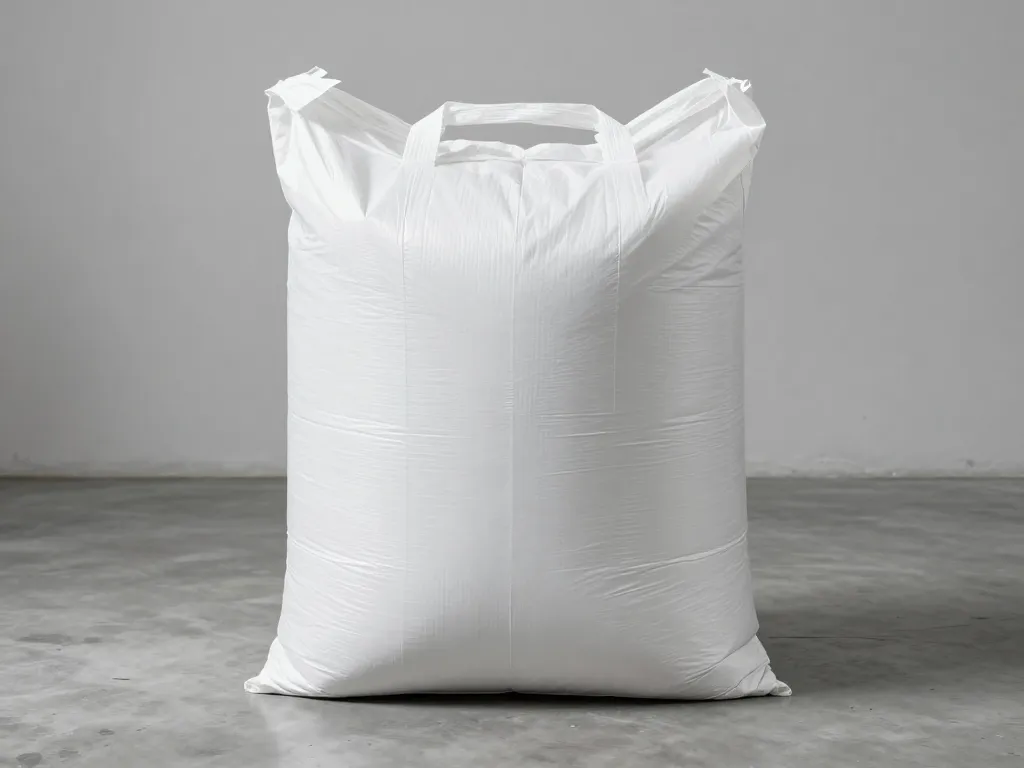
A self-closing FIBC is a bulk bag whose filling spout seals itself the moment the bag is full. No tie-rope, no clamp, no operator reaching into the dust plume to cinch a collar. On a line that fills hundreds of bags a day with cement, lime, or mineral powder, that single automation of the closure step changes dust exposure, housekeeping, and line speed at the same time. But the design is fussy: a flap that is the wrong stiffness, the wrong size, or the wrong geometry will hang open, flutter, or fail to latch — and then the buyer blames the bag, not the specification.
This article explains how the closure actually works, sizes the throughput benefit in hours per day, and spells out the product and capacity ranges where self-closing pays off — and where a manual-tie FIBC filling and discharge design is the better answer.
How the Self-Closing Mechanism Works
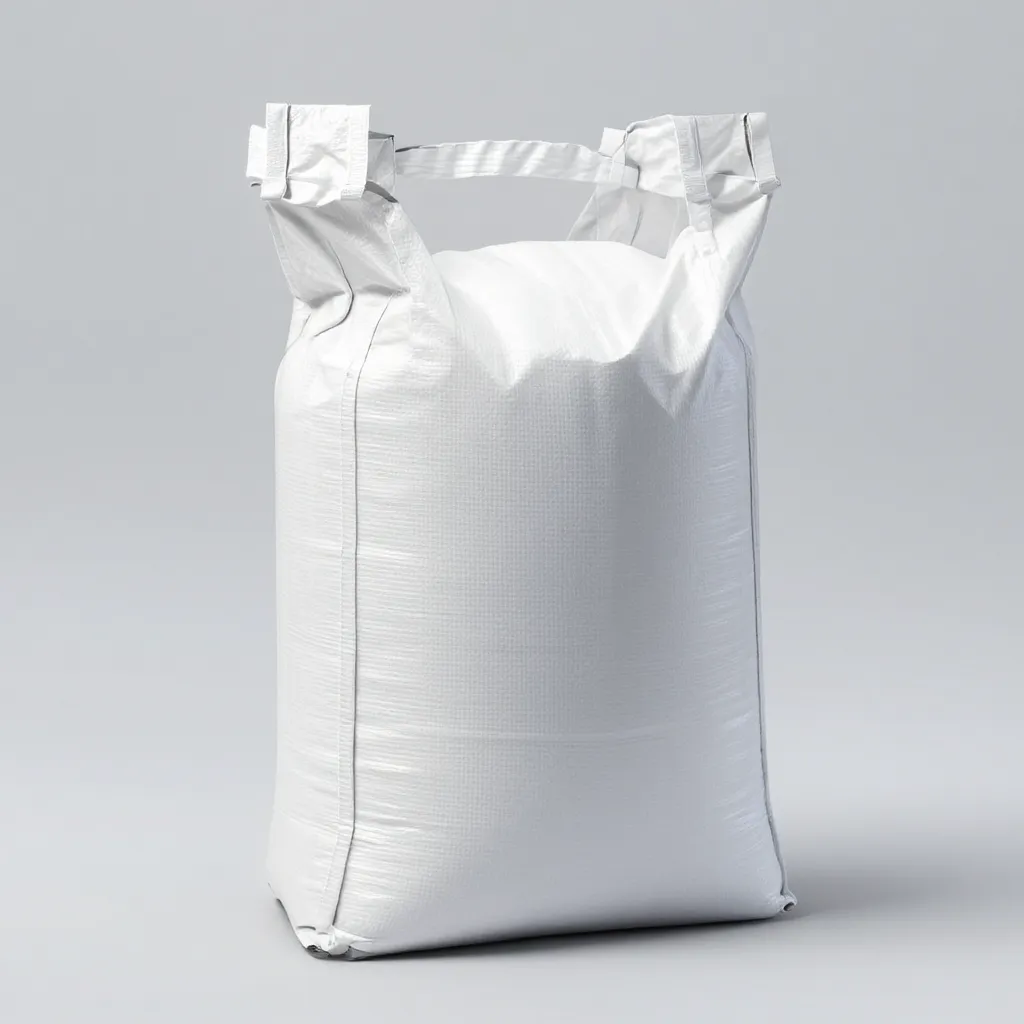
A self-closing top is a filling spout with an integrated flap that closes and latches automatically when product reaches the closure zone.
Flap Construction
The flap is cut from stiff woven polypropylene fabric — typically a heavier plain weave, 200–320 g/m², sometimes with a laminated film face — or from rigid polymer film or board. Stiffness is the whole game: the flap must hang open freely while the spout is being filled, then snap closed under its own gravity the instant the product level reaches it. A flap that is too limp will sag into the falling column, plug the spout prematurely, or never seal flat against the product bed. A flap that is too stiff will not conform to the spout lip and leaves a leaking gap.
Closure Trigger: Gravity and Cam or Lock Action
There are two main closing principles:
- Gravity flap. The simplest version. The product mass fills the bag up to the spout, and the flap swings down on a hinge or sewn hem until the rising product bed itself presses it shut. Some designs add a weighted hem or a light internal counterweight so the closing action is positive rather than passive.
- Cam or latch action. The flap rides a shaped spout lip or an internal cam strip. As the bag fills and the fabric under the spout stretches outward, the flap is cammed into a locked position against a keeper tab or locking loop. This version closes faster, latches more reliably under vibration, and tolerates slightly softer product beds, but it adds a sewing or molding operation to the spout.
Either way, the trigger is the filling event itself: full bag = closed bag. There is no second operation for the operator to remember, and nothing to tighten, so a forgotten closure cannot happen.
Flap-to-Spout Sizing
The flap opening should match the filling spout diameter, typically 200–400 mm for standard FIBCs, and the flap itself should overlap the spout lip by 10–20 mm all around so the seal lands on fabric rather than on product. Two mismatch errors are common:
- Flap too small — the seal gap is left open and product leaks out around the edge at the filler and on the way to transport.
- Flap too large or poorly trimmed — the extra fabric drags in the product column while filling, catches on the hopper spout, or folds over unevenly and never locks flat.
Both failures look like “the self-closing bag doesn’t close.” In practice they are sizing and stiffness errors, fixable at the drawing stage.
The Throughput Math: Recovering Tie-Off Time
The clearest economic argument is time. A manual tie-off of a spout or open-top closure takes 15–30 seconds per bag — two hands, one operator, repeated on every single bag.
Work the numbers on a typical line:
| Bags per day | Manual tie-off per bag | Tie-off time per day |
|---|---|---|
| 100 | 15–30 s | 25–50 min |
| 250 | 15–30 s | 63–125 min |
| 400 | 15–30 s | 1.7–3.3 filler-hours |
| 600 | 15–30 s | 2.5–5.0 filler-hours |
On a 400 bags/day line, that is roughly 1.7 to 3.3 hours of operator attention (and up to about 4 hours on slow shift patterns with two operators) spent only on closing bags. A self-closing top removes that step entirely; the bag seals itself as it fills, and the operator’s job at the station shrinks to positioning and weighing.
Recovery is not just the tie-off time. Because the closure no longer waits for the bag to stop moving, fill cycles run back-to-back, and the effective line rate typically improves by 10–20%. At 400 bags/day that is 40–80 more bags of capacity from the same equipment, or the same volume in less shift time. For plants running a single filling station on one shift, that margin is often worth more than the small price premium per bag.
Dust Containment at the Filler
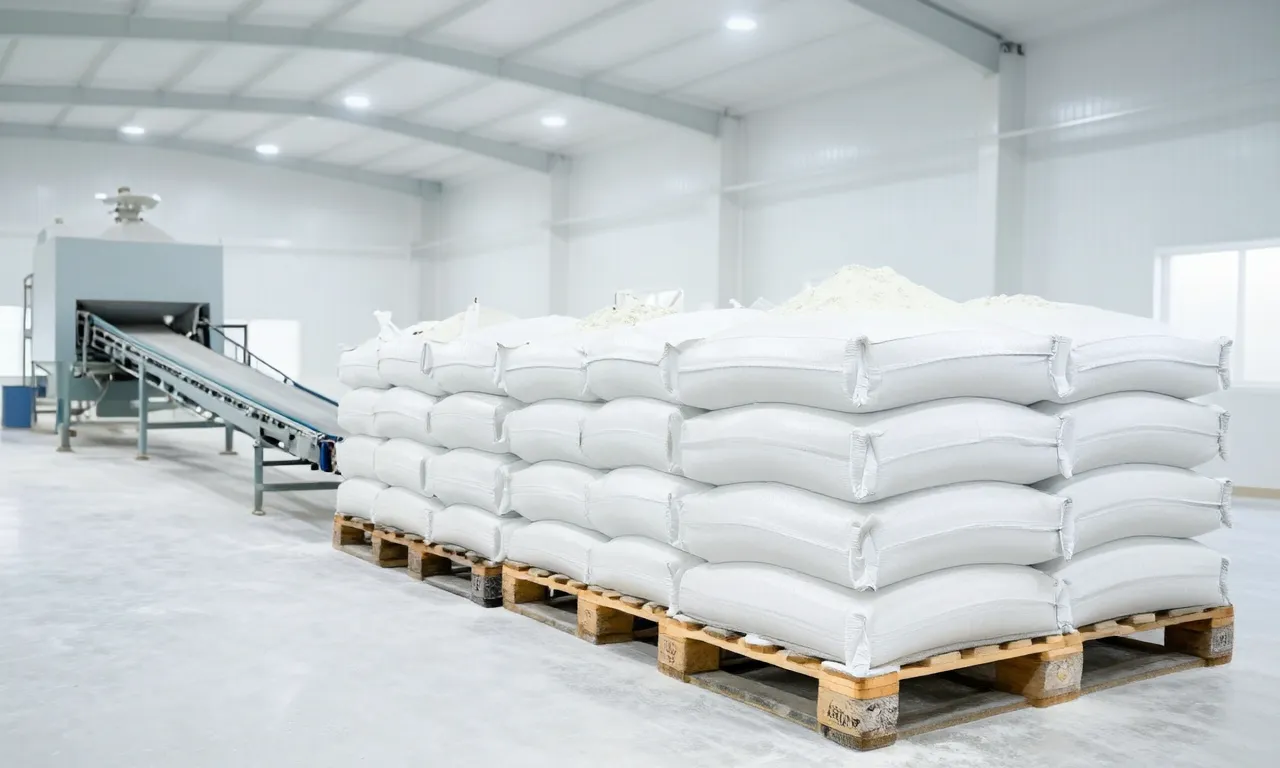
In cement, lime, gypsum, and mineral-powder plants, the filling station is the dominant source of operator fugitive-dust exposure — more than discharge, more than transport. Fine powder entrained at an open spout travels up the fill column and around the operator’s head and shoulders.
A self-closing design attacks this problem at both ends of the cycle:
- While filling, the enclosed spout connects directly to a dust-tight chute, so the only opening is the hopper-to-spout interface rather than a wide-open collar.
- At the moment of closure, the flap seals before the bag leaves the station, so the dust that would normally be thrown off when an open, tied bag is lifted and swung to the pallet stays inside the bag.
The practical effects are measurable: less respirable dust at the station (which feeds directly into occupational-exposure compliance for cement and lime), less product on the floor and pallets, and less time spent sweeping and bagging fines. Our self-closing mineral powder case study documents the before/after housekeeping labor at a filler that switched from manual tie-off to self-closing tops — the dust that used to be swept up was simply never released.
For the broader dust-control picture — spout sealing, liners, and downstream discharge dust — see the FIBC filling and discharge design guide.
Discharge Repeatability
Self-closing tops are usually paired with a bottom discharge spout, and the benefit extends past the filling station. A bag that fills through a controlled spout and then discharges through a controlled spout behaves repeatably: pour rate at a downstream hopper or mixer is consistent bag to bag, which matters for automated feeding.
Compare that with a ragged manual open-top opening, where each operator tears or cuts a different-size hole, or a hand-tied spout that closes to a different tightness each time and therefore empties to a different residual level. In metered dosing applications — pre-mix plants, concrete batching, chemical compounding — the variance from manual closures can be large enough to show up in batch-to-batch consistency. Enclosed, repeatable top and bottom spouts remove one of the few remaining human variables in the process.
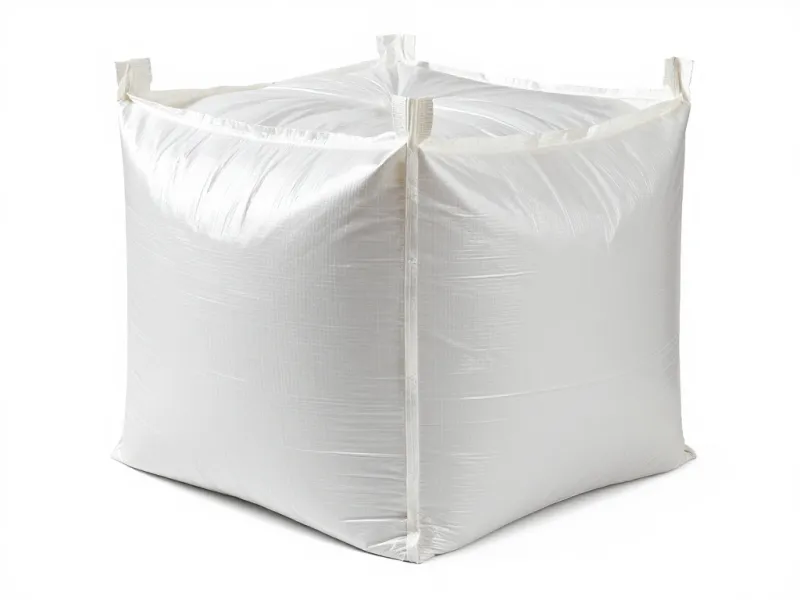
Body choice matters here too: if the self-closing bag also needs stack stability or a controlled footprint for logistics, compare the baffle bag versus U-panel decision — a baffle-bag body keeps the top closure geometry consistent while filling, because the bag walls do not bulge outward under load the way a plain U-panel does.
Limitations and Failure Modes
Self-closing is not a universal upgrade. The mechanism assumes a product that behaves like a free-flowing or near-free-flowing solid at the moment of closure. Four product classes break it:
- Sticky, tacky products (wet granules, plasticized powders, some food syrups): product wets the underside of the flap and the spout lip, so the flap glues in the open position or seals to product rather than to the lip.
- Cohesive, bridging powders (very fine, low-angle-of-repose dusts): the product bed under the spout forms a dome or bridge, and the flap has no flat surface to press against, so the seal is intermittent.
- Crystallizing or setting products (some cement pastes, resins, cooling melts): product hardens on the spout rim between cycles, jamming the hinge or cam so the flap cannot move at all.
- Wet or moisture-bearing loads (green clinker, damp clay, anything above a few percent moisture): weight and stickiness both spike; the flap sags, the seal gap leaks, and the extra mass accelerates flap-wear at the hinge.
The shared mechanism is the same: the flap needs a dry, mobile product surface to seal against, and a clean rim to pivot on. If the product changes between batches — dry on Monday, damp after rain on Tuesday — the closure will pass some cycles and fail others, which is the worst failure pattern for a production line because it is intermittent.
When Not to Use Self-Closing
Two ranges of applications are poor fits even with a perfect mechanism:
- Capacities below roughly 250 kg. The flap, hinge, keeper tab, and cam geometry are designed around a standard spout and a full-bag product mass that holds the bag shape during closure. On 100–200 kg mini bags there is not enough product mass under the spout to seat the flap positively, and the engineering cost of the closure detail is a large fraction of a small-bag price. For mini formats, a simple tie-off or twist-top closure is more reliable and cheaper.
- Aggressive abrasives at high fill rates. Silica sand, sharp-grained quarry product, or corundum moving fast through a spout will shred a fabric flap at the hinge and lip within a few hundred cycles. If the product is genuinely abrasive and the fill rate is high, specify a heavier flap with reinforced edges or a mechanical closure — or stay with manual ties and spend the recovered time on dust collection instead.
For abrasive-service context and body-design trade-offs, see our self-closing FIBC product page and the 4-panel FIBC range, where stiff panel geometry supports the closure action more cleanly than a soft U-panel wall.
Buyer Selection Checklist
Before specifying a self-closing FIBC, confirm these points in writing with your supplier:
- Flap material and weight: stiff woven fabric (200–320 g/m²) or polymer; state the exact construction, not “self-closing.”
- Flap-to-spout overlap: 10–20 mm all around; flap diameter matched to the 200–400 mm spout.
- Closure principle: gravity-only, weighted hem, or cam/latch — and which one the product behavior requires.
- Product moisture at closure: typical and worst-case; if worst-case exceeds a few percent, ask for a wet-product trial.
- Abrasion rating of the flap: hinge and lip reinforcement if the product is sharp-grained.
- Fill rate at the station: bags/hour, and the flap’s rated cycle life at that rate.
- Pairing with bottom spout: confirm the discharge spout size matches the downstream equipment.
- Sample trial: one small batch through your actual filler before committing to a program.
A short video or photo trial at your own filler is worth more than any specification sheet: the flap’s behavior in 15 seconds of real filling tells you more than a factory test report.
Bottom Line
Self-closing FIBCs earn their place where three conditions line up: a free-flowing, dry, non-aggressive powder; a filling rate high enough that manual tie-off time is real money (100+ bags/day); and a dust environment where an enclosed, self-sealing closure protects operators and housekeeping. Get the flap stiffness, sizing, and closure principle specified correctly and the mechanism is almost invisible — the bag simply closes itself, every cycle, no exceptions. Get those details wrong and it fails exactly when the line is busiest. Run the numbers first, trial the design with your own product, and let the filler station decide.