What Is GSM in FIBC: Fabric Weight Explained
Every FIBC specification sheet lists GSM alongside safe working load and dimensions, yet many procurement professionals gloss over this number without understanding what it truly represents. GSM in FIBC terminology stands for grams per square meter, a direct measure of the fabric weight used to construct the bag. This single metric influences tensile strength, burst resistance, UV protection, and ultimately the total cost of your bulk packaging. Whether you are sourcing standard circular bags or specialized containers for hazardous materials, knowing how to interpret GSM gives you a concrete basis for evaluating quality and negotiating pricing with suppliers.
What Does GSM Mean?
GSM is an abbreviation for “grams per square meter.” In the context of FIBC bags, it measures the weight of the woven polypropylene fabric used to make the bag body. A fabric rated at 160 GSM weighs 160 grams per square meter of material. Higher GSM values indicate heavier, thicker fabric. Lower GSM values indicate lighter, thinner fabric.
The measurement is taken on the base fabric before any additional coatings, treatments, or lamination are applied. This distinction matters because a coated fabric may feel heavier in hand, but the GSM specification refers to the underlying woven substrate alone. When a supplier quotes a bag at 180 GSM, they are describing the woven polypropylene tape that forms the structural body of the bag.
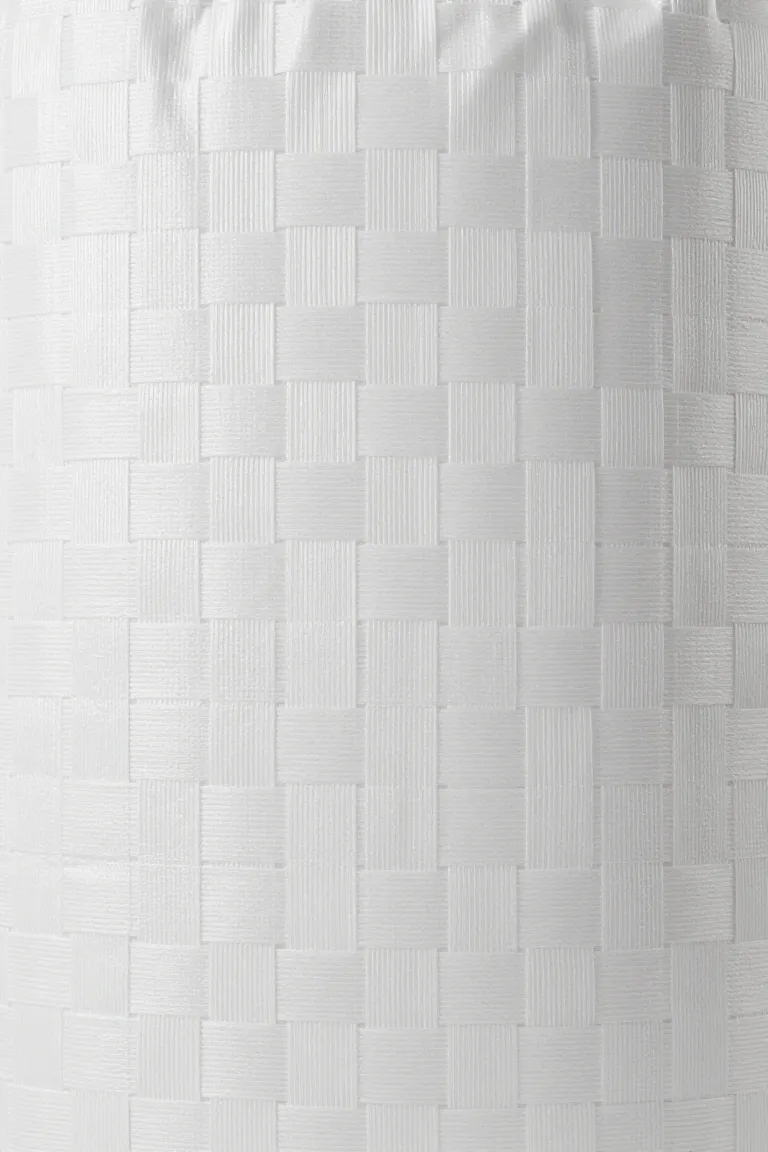
Fabric weight is determined during the weaving process. The density of the weave — how many tapes per inch in both the warp (lengthwise) and weft (crosswise) directions — directly controls GSM. A tighter weave with more tapes per inch produces a heavier fabric with smaller gaps between tapes. A looser weave produces lighter fabric with more open space. The thickness of the individual polypropylene tapes also contributes: thicker tapes yield higher GSM values even at identical weave counts.
GSM is not unique to FIBC. The textile industry uses this metric universally for fabrics ranging from cotton bed sheets to industrial geotextiles. In bulk packaging, however, GSM serves a particularly critical function because it correlates directly with the mechanical performance of the container under load. Understanding GSM in FIBC procurement means you can read a specification sheet and predict how the bag will perform before you ever receive a sample.
Why GSM Matters for FIBC Performance
Tensile Strength and Load-Bearing Capacity
The relationship between GSM and tensile strength is straightforward: heavier fabric carries more load. When an FIBC is filled to its rated capacity, the fabric walls must resist the outward pressure exerted by the contents. A 140 GSM fabric may be adequate for lightweight fill materials at lower safe working loads, but it will deform or fail under the stress of a 2000 kg payload of dense mineral powder. Higher GSM fabrics distribute stress across more material per unit area, reducing the likelihood of seam failure, fabric tearing, or catastrophic bag rupture during lifting and transport.
Independent testing consistently shows that breaking strength increases proportionally with GSM within the range of common FIBC fabrics. A jump from 140 GSM to 180 GSM can increase the fabric’s break strength by 25 to 35 percent, depending on the specific weave pattern and tape quality. This margin is significant in real-world conditions where bags are subjected to dynamic forces during filling, stacking, and transit that exceed static laboratory loads.
Durability and Reuse Potential
If your operation uses multi-trip FIBCs, GSM is one of the strongest indicators of how many filling and emptying cycles a bag can withstand before it must be retired. Heavier fabric resists abrasion from the product inside, friction against pallets and container walls, and the cumulative stress of repeated handling. A bag constructed from 180 GSM fabric may be rated for five or more trips in a closed-loop system, while a 130 GSM version of the same design might only be suitable for single use.
UV degradation also proceeds more slowly in heavier fabrics because there is simply more material for ultraviolet radiation to penetrate before the structural integrity is compromised. For bags that will be stored outdoors or transported on open flatbeds, this added UV resistance translates directly into longer service life and lower per-trip packaging costs.
Cost Implications
Fabric accounts for 60 to 70 percent of the raw material cost of an FIBC. Higher GSM means more polypropylene resin, more weaving time, and higher freight costs per bag because each unit is physically heavier. The price difference between a 140 GSM and a 180 GSM bag of identical design can range from 8 to 15 percent depending on market conditions for polypropylene.
Specifying GSM that exceeds what your application requires is a waste of packaging budget. Specifying GSM that is too low invites product loss, safety incidents, and regulatory non-compliance. The goal is to match the fabric weight to your actual performance requirements with a reasonable safety margin — not to over-engineer or under-engineer the bag. For help evaluating which bag construction suits your product, see our types of FIBC bags guide.
GSM Ranges and Typical Applications
FIBC fabrics generally fall into three GSM categories. Each range has characteristics that make it suited to particular products and handling conditions.
Light Fabric: 100 to 140 GSM
Light fabric is used for low-density products that exert minimal outward pressure on the bag walls. Typical applications include packaging expanded perlite, vermiculite, wood chips, animal feed pellets, and other bulky but lightweight materials. Safe working loads for bags in this GSM range are usually limited to 500 to 1000 kg. The cost advantage is clear: lighter fabric means lower material input and lower per-unit price. However, light fabric is not suitable for sharp-edged products, high stacking heights, or any application requiring multi-trip reuse.
Medium Fabric: 150 to 180 GSM
This is the workhorse range for the majority of standard FIBC applications. Medium-weight fabric handles most granular and powdered products including cement, sand, fertilizer, plastic resins, grain, sugar, and salt. Safe working loads typically span 1000 to 1500 kg. Bags in this GSM range offer a practical balance of strength, durability, and cost that meets the needs of most general-purpose bulk packaging operations. If you are unsure where to start when specifying a bag, 160 GSM is a common default that performs reliably across a wide range of products.
Heavy Fabric: 190 to 260 GSM and Above
Heavy fabric is specified for demanding applications involving high density, sharp edges, heavy loads, or hazardous materials. Products such as metal powders, crushed stone, refractory materials, and certain chemicals require the extra resistance that higher GSM provides. Safe working loads in this range reach 1500 to 2500 kg and beyond. UN-certified bags for dangerous goods often use fabric at or above 200 GSM to meet the rigorous testing standards set by the United Nations Recommendations on the Transport of Dangerous Goods. Heavy fabric is also the standard choice for bags designed for multiple reuse cycles in closed-loop logistics systems.
Coated vs. Uncoated Fabric
GSM measures the base woven fabric, but many FIBC applications also require a lamination or coating on one or both sides of the fabric. Coating adds moisture resistance, sift-proofing, and improved barrier properties without changing the GSM rating of the underlying weave. A 160 GSM coated fabric still weighs 160 grams per square meter in its woven component — the coating is an additional layer. When comparing specifications between suppliers, confirm whether the GSM value refers to the base fabric alone or includes coating weight, as inconsistency here can lead to mismatched expectations.
How to Choose the Right GSM for Your Application
Start with your product. Determine its bulk density, particle shape, and moisture content. Dense products with angular particles require higher GSM to resist puncture and abrasion. Fine powders may benefit more from coating and liner options than from simply increasing GSM.
Next, define your safe working load and safety factor. Standard single-trip bags use a 5:1 safety factor, meaning the bag must withstand five times its rated load in testing. Multi-trip bags use a 6:1 safety factor. Higher SWL requirements almost always demand higher GSM fabric. The lifting configuration also plays a role — cross-corner loops distribute load differently than corner loops, and the fabric must handle the stress pattern accordingly. Our lifting loops guide covers this topic in detail.
Consider your logistics environment. Will bags be stacked in a warehouse for months? Transported on open trucks under sun exposure? Filled and emptied repeatedly in a closed-loop system? Each scenario adds requirements that heavier GSM addresses more effectively.
Finally, evaluate the total cost of packaging, not just the per-bag price. A heavier GSM bag that lasts for multiple trips or prevents a single product-loss incident can deliver a lower total cost than the cheapest acceptable single-use option. Request samples at two or three GSM levels and test them under your actual operating conditions before committing to a bulk order. You can explore available options in our product range.
Frequently Asked Questions
Does higher GSM always mean better quality?
Not necessarily. Higher GSM means heavier fabric, which provides more tensile strength and abrasion resistance. But quality also depends on the quality of the polypropylene resin, the consistency of the weave, the precision of the stitching, and the overall bag construction. A well-made 150 GSM bag from a reputable manufacturer can outperform a poorly made 180 GSM bag. Use GSM as one data point alongside supplier certifications, test reports, and sample evaluations.
What GSM is standard for most FIBC bags?
The most common GSM range for general-purpose FIBC bags is 150 to 180 GSM. Within that range, 160 GSM is widely used as a default specification for standard 1000 kg single-trip bags. Specialized applications such as heavy minerals or UN-certified dangerous goods packaging typically require 200 GSM or higher.
How does GSM affect the cost of an FIBC bag?
Fabric constitutes the largest single cost component in FIBC manufacturing. As GSM increases, more polypropylene resin is consumed per square meter of fabric, which raises raw material costs. Weaving heavier fabric also takes more time on the loom, adding to production costs. As a general rule, expect an 8 to 15 percent cost increase for each 40 GSM step up within the standard range.
Can I use a lower GSM bag to save money?
You can, provided the lower GSM fabric still meets your safe working load and safety factor requirements. The risk arises when GSM is reduced below what the application demands. A bag failure during lifting or transport can result in product loss, equipment damage, personal injury, and cleanup costs that far exceed the savings from specifying lighter fabric. Always verify that any GSM reduction is supported by break-strength testing data for your specific product and fill weight.
Is GSM the same as denier?
No. GSM measures fabric weight per unit area (grams per square meter), while denier measures the linear density of individual yarns or tapes (grams per 9000 meters). Both metrics relate to fabric thickness and strength, but they describe different properties. Two fabrics can share the same GSM value while using tapes of different denier, depending on the weave density. In FIBC specifications, GSM is the more commonly referenced metric because it describes the overall fabric rather than its individual components.
Ready to Specify the Right GSM?
Understanding GSM in FIBC gives you a tangible, measurable standard to evaluate bag quality and compare supplier quotations on equal footing. Rather than accepting a supplier’s recommendation at face value, you can specify the fabric weight that matches your product density, safe working load, reuse requirements, and logistics environment. If you need help translating your application requirements into a precise FIBC specification, our team is ready to assist. Browse our product range to find bags that meet your GSM requirements, or contact us directly for a tailored recommendation based on your specific product and handling conditions.