Sustainable FIBC Solutions: Reusable and Recyclable Options
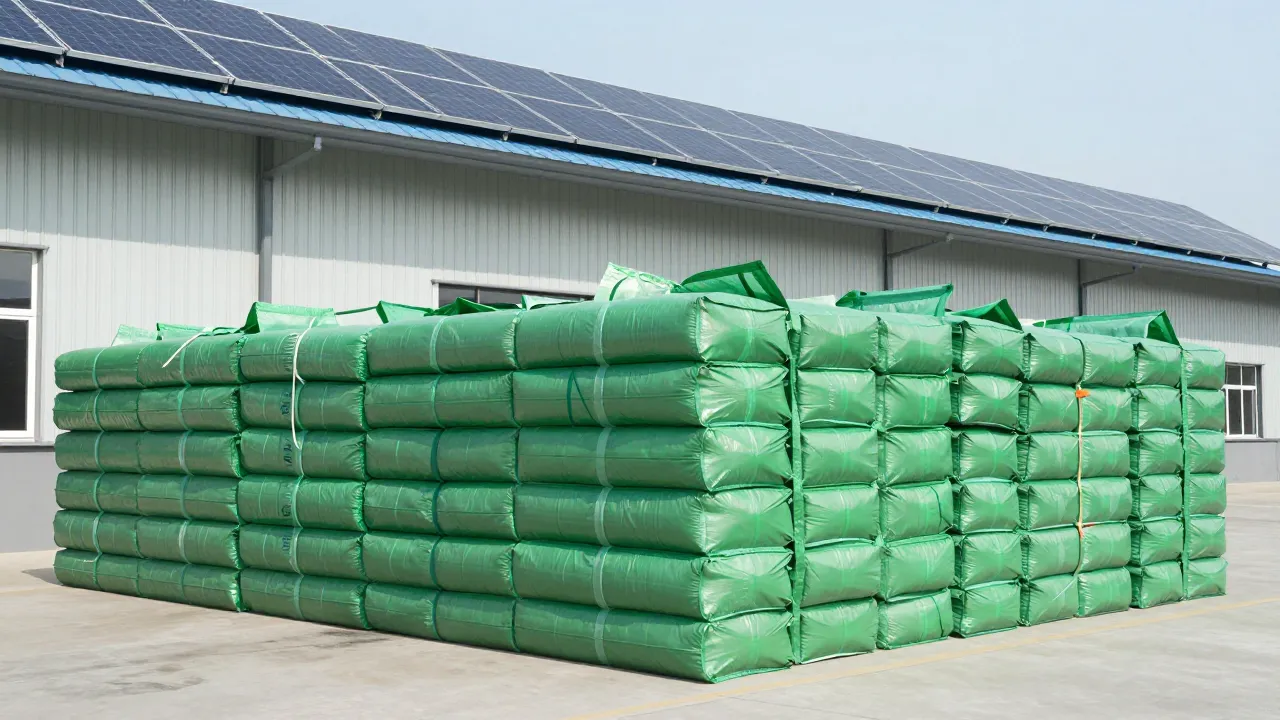
Sustainability in industrial packaging is no longer a marketing trend — it is a business imperative driven by regulatory requirements, customer expectations, and genuine environmental responsibility. FIBC bags, made primarily from woven polypropylene, present both challenges and opportunities in the pursuit of more sustainable bulk packaging. This article examines the practical options available today for reducing the environmental impact of your FIBC packaging.
The Environmental Profile of Polypropylene
Polypropylene (PP) is the dominant material in FIBC manufacturing, and understanding its environmental characteristics is the foundation for making sustainable choices. PP is a thermoplastic polymer that is fully recyclable, meaning it can be melted and reformed into new products multiple times without significant degradation of material properties. It is also one of the least toxic plastics, producing no harmful leachates under normal conditions. The environmental challenge with PP lies not in the material itself but in how it is managed at end of life. An FIBC bag that is landfilled represents wasted material and embodied energy. The same bag, when collected and recycled, becomes a valuable feedstock for new products.
Multi-Trip Reusable FIBC Programs
The most direct way to reduce the environmental footprint of FIBC packaging is to use each bag multiple times. Multi-trip FIBCs are designed and tested for a specified number of uses — typically 5 to 8 trips — with a 5:1 safety factor that accounts for the cumulative stress of repeated filling, handling, and emptying. Reusable programs work best in closed-loop logistics where the empty bags can be collected and returned to the filling point. Industries such as seed, grain, and chemical distribution are well suited to this model because the supply chain often involves regular deliveries between the same partners. A single reusable FIBC replacing five single-trip bags reduces raw material consumption, manufacturing energy, and waste generation by approximately 80 percent on a per-trip basis.
Recycled Content Integration
FIBC manufacturers are increasingly offering bags that incorporate recycled polypropylene content. Post-industrial recycled (PIR) material comes from manufacturing scrap and off-cuts that are collected and reprocessed within the production facility. Post-consumer recycled (PCR) material is recovered from used bags and other PP products after they have completed their service life. Current technology allows for bags with 20 to 40 percent recycled content while maintaining performance standards. The recycled material is typically used in the internal fabric layers, with virgin PP on the food-contact or visible surfaces to maintain quality and compliance. As collection and sorting infrastructure improves, the proportion of recycled content in FIBCs will continue to increase.
End-of-Life Recycling Pathways
When FIBCs reach the end of their useful life, several recycling pathways are available. Mechanical recycling involves shredding, washing, and regranulating the PP material into pellets that can be used for manufacturing new products including non-food packaging, agricultural supplies, construction materials, and automotive components. Energy recovery through incineration in waste-to-energy facilities is an option where recycling infrastructure is limited, though it is less preferable than material recycling. Some FIBC suppliers are establishing take-back programs that simplify the collection process and ensure bags are directed to appropriate recycling facilities rather than landfills.
Building a Sustainable Packaging Strategy
A comprehensive sustainable packaging strategy for FIBCs goes beyond individual bag choices. Audit your current packaging usage to establish a baseline for material consumption and waste generation. Identify opportunities to switch from single-trip to multi-trip bags in appropriate applications. Work with your supplier to source bags with recycled content and verify the environmental claims with documentation. Implement a collection and recycling program for bags at end of life, partnering with certified recyclers who can provide documentation of proper processing. Set measurable targets for waste reduction and track progress over time. Sustainability in bulk packaging is achievable through practical, incremental improvements that benefit both the environment and your operational efficiency.