FIBC Bags for Chemical Industry: Safety Guide
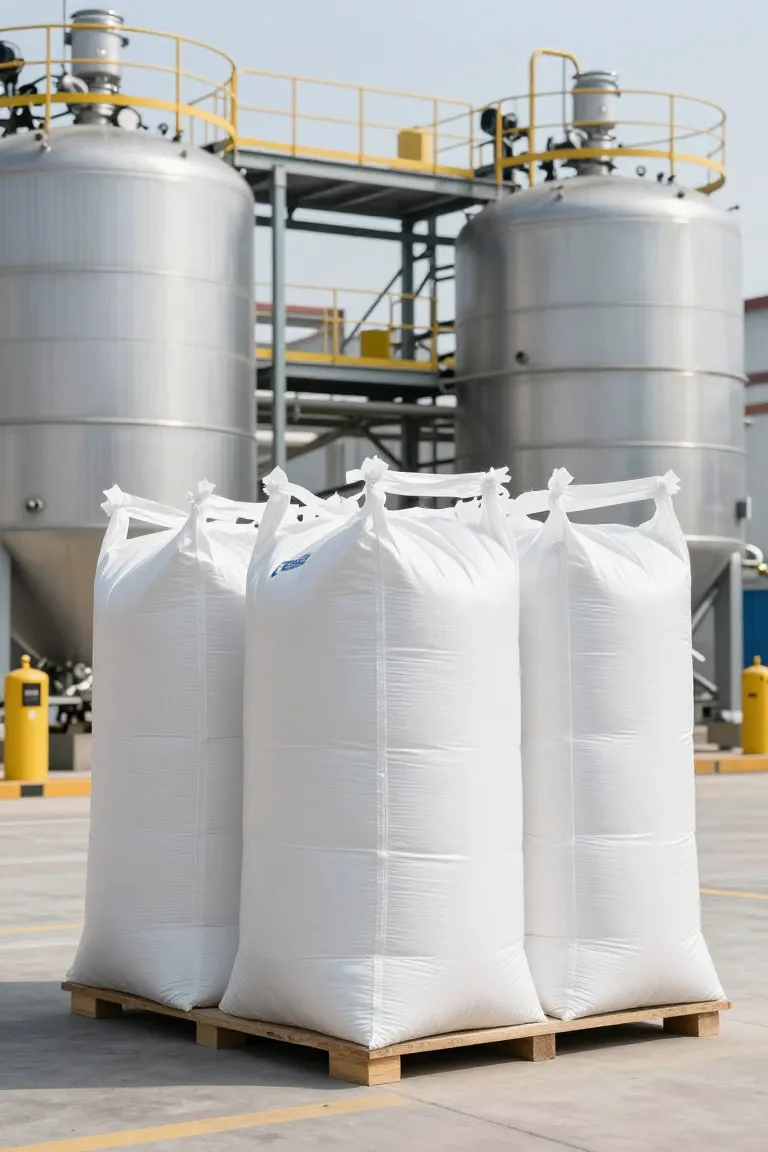
Every year, the global chemical industry transports millions of metric tons of powdered and granular substances in FIBC bulk bags. Yet a single electrostatic discharge during filling or emptying can ignite a dust explosion, destroying facilities and endangering lives. Choosing the right FIBC bags for chemical applications is not just a procurement decision — it is a safety imperative. This guide covers everything chemical manufacturers and distributors need to know about selecting, certifying, and using FIBC bags that meet the industry’s rigorous safety and compliance standards.
What Makes FIBC Bags Suitable for Chemical Packaging?
FIBC (Flexible Intermediate Bulk Containers) bags have become the packaging standard for the chemical industry because they combine large-capacity bulk handling with the safety features that hazardous materials demand. Made from woven polypropylene, these bags can hold between 500 and 2,000 kilograms of product while maintaining structural integrity under demanding conditions.
What sets FIBC bags apart for chemical use is their versatility in addressing specific hazards. Through specialized construction, they can provide electrostatic protection, moisture barriers, sift-proof seams, and chemical-resistant liners. The bags can be manufactured to meet UN certification standards for hazardous material transport, ATEX directives for explosive atmospheres, and industry-specific compliance frameworks that govern chemical packaging worldwide.
The woven polypropylene fabric itself offers excellent resistance to most industrial chemicals, and when combined with inner liners made from polyethylene or aluminum foil, it creates a robust containment system that protects both the product and the environment from contamination or leakage.
Why FIBC Bags Are the Standard for Chemical Packaging
Unmatched Safety Through Electrostatic Protection
The most critical safety concern in chemical packaging is static electricity. When fine chemical powders are pneumatically conveyed into or out of bags, friction generates electrostatic charges that accumulate on the bag surface. Without proper dissipation, these charges can discharge as sparks, igniting flammable dust clouds or solvent vapors.
FIBC bags address this through the Type A through D electrostatic classification system. For flammable environments, conductive FIBC bags (Type C and Type D) are engineered to safely dissipate static charges. Type C bags use interconnected conductive threads that must be grounded during filling and emptying, providing a controlled path for charge dissipation. Type D bags use special antistatic fabrics that dissipate charges without requiring a grounding connection, offering additional operational flexibility.
Regulatory Compliance and Certification
Chemical packaging is subject to stringent regulatory oversight. In the European Union, the ATEX directive mandates specific equipment categories for use in explosive atmospheres. In the United States, OSHA and NFPA standards govern combustible dust handling. International shipments of hazardous materials require UN-certified packaging that meets the United Nations Recommendations on the Transport of Dangerous Goods.
UN-certified bulk bags undergo rigorous testing including drop tests, top-lift tests, stacking tests, and righting tests. Each certified bag carries a UN marking that specifies the packaging type, permitted goods class, and gross mass rating. Using uncertified bags for hazardous chemical transport can result in shipment rejection, regulatory fines, and legal liability in the event of an incident.
Cost Efficiency at Scale
Compared to rigid IBC containers, metal drums, and other traditional chemical packaging, FIBC bags offer significant cost advantages. A standard FIBC bag costs between $3 and $15 depending on specifications, while a rigid IBC container ranges from $100 to $400. When handling thousands of metric tons of chemical product annually, this difference compounds into substantial savings.
Beyond the per-unit cost, FIBC bags reduce freight expenses because empty bags fold flat, taking up roughly 1/20th the space of empty rigid containers. This means more product ships per container load, and return freight costs for empty packaging are virtually eliminated for single-use bags.
Environmental and Sustainability Benefits
Modern chemical companies increasingly factor sustainability into packaging decisions. FIBC bags generate significantly less waste than rigid alternatives. A single FIBC bag weighing approximately 2 kilograms can replace three to four 50-kilogram drums, reducing packaging material waste by up to 70 percent.
Many FIBC manufacturers now offer bags made from recycled polypropylene, and the bags themselves are recyclable after use. For operations with closed-loop logistics, reusable multi-trip FIBC bags further reduce environmental impact while lowering per-trip packaging costs.
Key FIBC Requirements for Different Chemical Applications
Flammable Powders and Solvents
For products that generate flammable dust clouds or are handled near solvent vapors, Type C or Type D FIBC bags are mandatory. Type C bags with proper grounding have demonstrated zero static discharge incidents over extended operational periods in controlled studies. The selection between Type C and Type D depends on your facility’s grounding infrastructure, operator training protocols, and the specific hazard classification of the materials being handled.
Corrosive and Reactive Chemicals
Corrosive chemicals require FIBC bags with specialized liners that prevent chemical reaction with the polypropylene fabric. Polyethylene (PE) liners provide a chemical barrier for most acids and bases, while aluminum foil liners offer additional protection for highly reactive or moisture-sensitive compounds. The liner thickness typically ranges from 50 to 150 microns depending on the chemical aggressiveness.
Food-Grade Chemical Products
Chemicals used in food processing, pharmaceutical excipients, and food additives require FIBC bags manufactured in facilities that maintain BRC, FDA, or EFSA certification. These bags must be produced in clean-room conditions with full traceability from raw material to finished product. The fabric, threads, and liners must all meet food-contact safety standards.
Hazardous Materials (UN Certified)
Hazardous chemicals classified under UN Recommendations require UN-certified bulk bags rated for the specific packing group (I, II, or III). The certification process involves testing bags to destruction to verify they can withstand the forces encountered during transport, including drops from height, compression during stacking, and the dynamic loads of lifting by crane or forklift.
How to Choose FIBC Bags for Your Chemical Products
Selecting the right FIBC bag for chemical applications requires a systematic evaluation of your product, environment, and logistics chain. Start by identifying your product’s hazard classification — is it flammable, corrosive, toxic, or inert? This determines the electrostatic protection type and any special liner requirements.
Next, evaluate your operating environment. Are there flammable gas or vapor atmospheres present during filling or emptying? If yes, Type C or Type D bags are essential. Do you need moisture protection? Specify the appropriate liner type and thickness.
For international shipments, verify that your bags carry the correct UN certification marking for your product’s hazard class and packing group. Request test certificates from your supplier and verify their validity — UN certifications typically require retesting every 12 to 24 months.
Common mistakes to avoid include using Type A or Type B bags in flammable environments, failing to ground Type C bags during operations, and assuming all FIBC bags are suitable for all chemicals. Each application requires a specific combination of bag type, liner, and certification.
Frequently Asked Questions
What type of FIBC bag is best for chemical powders? The best type depends on the specific chemical and operating environment. For flammable powders, Type C (with grounding) or Type D bags are required. For non-flammable chemicals, Type A bags with appropriate liners may suffice. Always conduct a hazard assessment before selecting bag type.
Do I need UN certification for all chemical shipments? UN certification is required for hazardous materials classified under the UN Recommendations on the Transport of Dangerous Goods. Not all chemicals require UN-certified packaging — check the Safety Data Sheet (SDS) for your product’s UN number and packing group to determine requirements.
Can FIBC bags be reused for chemical products? Multi-trip FIBC bags can be reused, but only for non-hazardous chemicals and only if they pass inspection between uses. For hazardous materials, single-use bags are standard practice to prevent cross-contamination and ensure structural integrity.
How do I ensure proper grounding of Type C FIBC bags? Type C bags must be connected to a verified grounding point during all filling, handling, and emptying operations. Use grounding cables with continuity monitoring, and verify the connection before starting any operation. Train all operators on grounding procedures and make grounding verification part of your standard operating checklist.
What liners are available for chemical FIBC bags? Common liner options include polyethylene (PE) liners for general moisture and contamination protection, aluminum foil liners for moisture-sensitive and oxygen-sensitive products, and conductive liners for additional static protection. Liner thickness ranges from 50 to 200 microns depending on the application.
Choosing the right FIBC bags for your chemical operation protects your workers, your product, and your bottom line. Whether you need conductive bags for flammable environments, UN-certified bags for hazardous material export, or specialized liners for reactive chemicals, the key is matching bag specifications to your specific application requirements. Explore our range of FIBC products designed for the chemical industry, or contact our team for personalized guidance on selecting the ideal packaging solution for your chemical products.